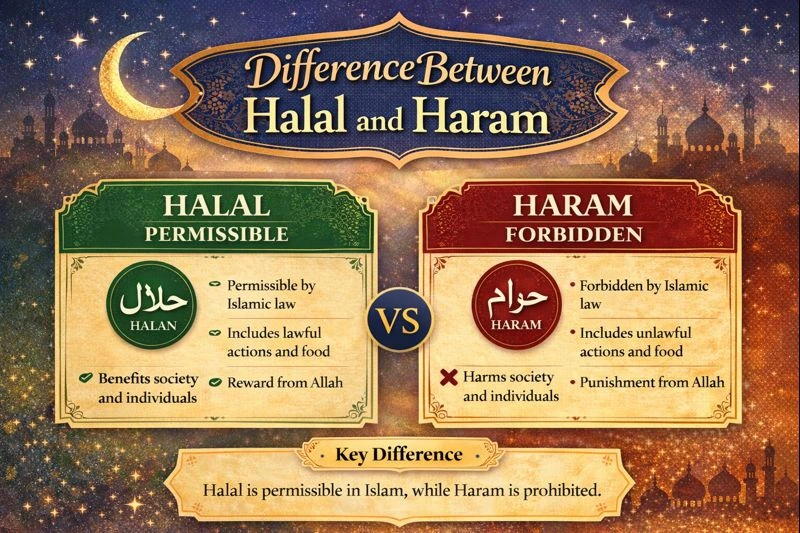
Understanding the difference between halal and haram is central in Islam. These two concepts define a Muslim’s daily decisions, guiding choices in food, actions, and lifestyle as outlined by Allah in the Quran and Hadith. Through authentic Islamic learning platforms such as Noor Class, Muslims can better understand these teachings.
Halal is what Allah permits for benefit and well-being; haram is what He forbids to protect us from harm. This knowledge directs Muslims to obey Allah and seek His approval.
What Does Halal Mean in Islam?
Halal (حلال) means permissible or lawful. In Islam, halal is anything Allah allows without sin or punishment.
Halal applies to:
- Food and drink
- Earning and business
- Clothing and lifestyle
- Behavior and actions
Allah says in the Quran:
“O mankind, eat from whatever is on earth [that is] lawful and good…”
(Surah Al-Baqarah 2:168)
This verse shows that halal is both lawful and beneficial.
What Does Haram Mean in Islam?
Haram (حرام) means forbidden. Haram covers what Allah clearly prohibits, and doing so knowingly is harmful to a believer’s faith.
Haram includes:
- Certain foods and drinks
- Unjust earnings
- Immoral behavior
- Harmful actions
Allah says:
“He has only forbidden to you dead animals, blood, the flesh of swine, and that which has been dedicated to other than Allah…”
(Surah Al-Baqarah 2:173)
Why Islam Distinguishes Between Halal and Haram
The distinction between halal and haram exists to:
- Protect physical health
- Preserve moral values
- Strengthen faith
- Promote justice and cleanliness.
- Ensure spiritual success
The Prophet Muhammad ﷺ said:
“The halal is clear and the haram is clear, and between them are doubtful matters…”
(Bukhari & Muslim)
This Hadith teaches Muslims to be careful and aware of their choices.
Foods Mentioned in the Quran: Halal and Haram
The Quran and Hadith mention specific foods as halal and haram, providing direct and practical guidance for Muslims.
Foods Mentioned in the Quran
| Lawful animals | Cattle, sheep, goats | Halal |
| Seafood | Fish and sea creatures | Halal |
| Dead animals | Animals not slaughtered properly | Haram |
| Blood | Flowing blood | Haram |
| Pork | Flesh of swine | Haram |
| Alcohol | Intoxicants | Haram |
Allah says:
“Forbidden to you are dead animals, blood, the flesh of swine…”
(Surah Al-Ma’idah 5:3)
These foods form the foundation of Islamic dietary laws and clarify what is halal and what is haram.
Foods Mentioned in the Hadith: Additional Guidance
The Hadith of the Prophet ﷺ further explains which foods are halal and haram, clarifying details not explicitly mentioned in the Quran, including many foods mentioned in the Hadith that provide practical guidance for Muslims.
Foods Mentioned in the Hadith
| Carnivorous animals (lion, tiger) | Haram | Muslim |
| Birds with talons (eagle, hawk) | Haram | Abu Dawood |
| Donkey meat (domestic) | Haram | Bukhari |
| Animals with fangs | Haram | Muslim |
| Locusts | Halal | Ibn Majah |
This guidance from the Hadith helps clarify the laws of lawful eating for Muslims.
Halal Foods vs Haram Foods (Simple Table)
Halal and Haram Foods Table
| Properly slaughtered meat | Pork and pork products |
| Fish and seafood | Alcohol and intoxicants |
| Fruits and vegetables | Blood |
| Milk and honey | Dead animals |
| Grains and legumes | Meat sacrificed to idols |
This comparison helps explain halal and haram in food choices.
Halal vs Haram Beyond Food
Halal and haram apply to all parts of life, not just food.
Examples:
- Halal earnings: Honest business, lawful jobs
- Haram earnings: Interest (riba), fraud, bribery
- Halal behavior: Kindness, honesty, modesty
- Haram behavior: Lying, injustice, immorality
Islam urges Muslims to always choose halal, even in difficulty, emphasizing the importance of these choices.
How to Decide if Something Is Halal or Haram
When unsure, Muslims should:
- Refer to the Quran
- Consult authentic Hadith
- Ask knowledgeable scholars
- Avoid doubtful matters
The Prophet ﷺ advised avoiding what causes doubt to protect one’s faith.
Wisdom and Benefits of Choosing Halal
Choosing halal:
- Brings peace of heart
- Increases barakah (blessings)
- Strengthens connection with Allah
- Leads to success in this life and the Hereafter
Avoiding haram protects from harm in this life and the next.
Conclusion
The difference between halal and haram in Islam is clear and rooted in divine wisdom. Through the foods mentioned in the Quran and the Hadith, Allah and His Messenger ﷺ have provided complete guidance for Muslims.
Whether deciding what is halal or haram, the Quran and Sunnah are our main sources. Choosing halal is a path toward purity, obedience, and success.