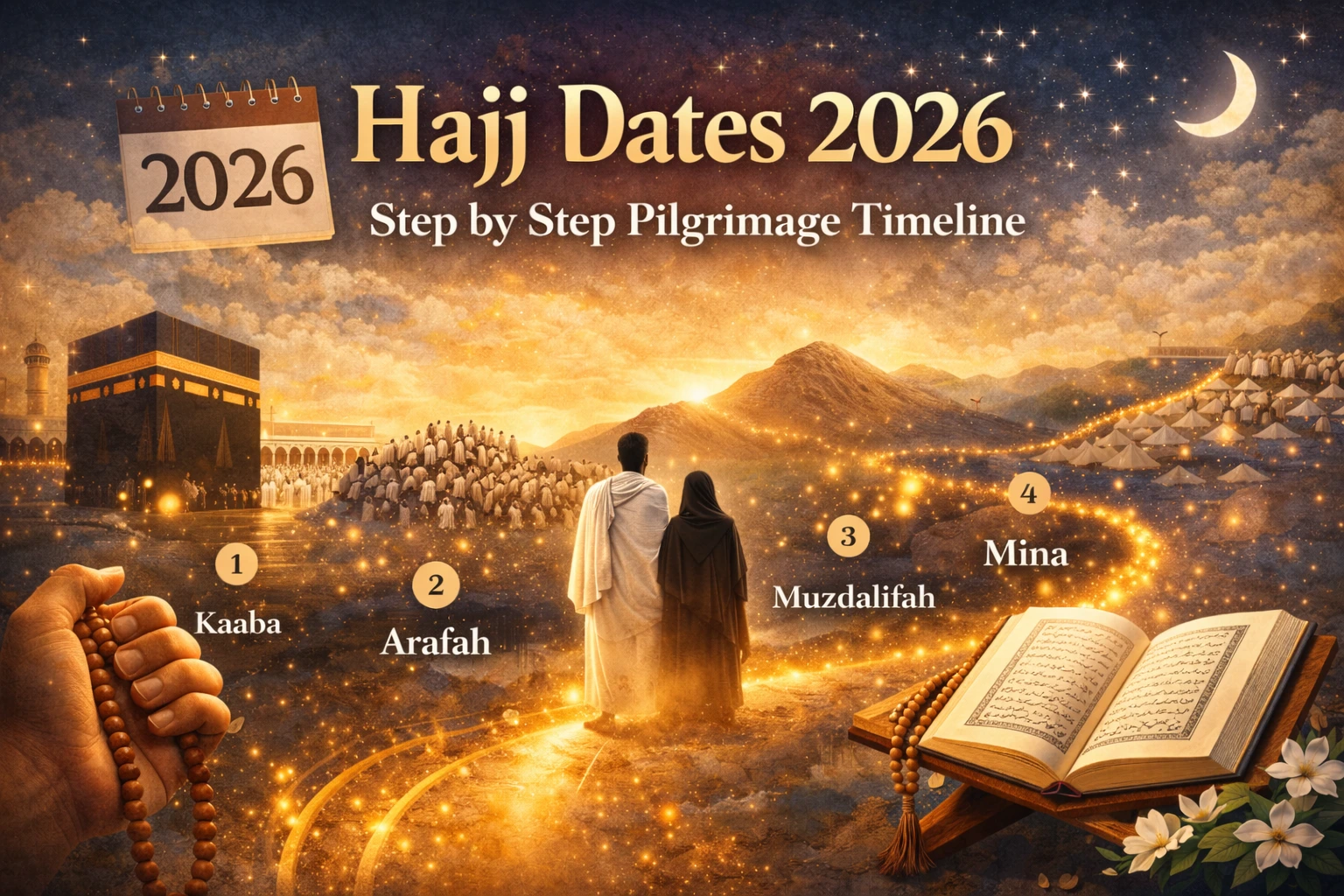
Hajj is the fifth pillar of Islam and one of the most sacred journeys a Muslim can undertake. For American Muslims preparing ahead of time, understanding the hajj 2026 dates and the step-by-step pilgrimage schedule is essential. Planning early allows you to arrange travel, learn the rituals properly, and spiritually prepare in light of the Qur’an and Sunnah.
Hajj takes place during the month of Dhul Hijjah, the 12th month of the Islamic calendar. Although exact hajj 2026 dates will be confirmed based on moon sighting, Hajj is expected to fall around late May or early June 2026 (subject to official announcement).
This guide explains the full pilgrimage timeline so you can prepare confidently for hajj 2026.
The Importance of Hajj in the Qur’an and Sunnah
Allah says in the Qur’an:
“And [due] to Allah from the people is a pilgrimage to the House – for whoever is able to find a way.” (Surah Aal-Imran 3:97)
Hajj is obligatory once in a lifetime for Muslims who are physically and financially able. The Prophet Muhammad ﷺ said:
“Whoever performs Hajj and does not commit any obscenity or wrongdoing will return as pure as the day his mother gave birth to him.” (Bukhari & Muslim)
For Muslims living in the United States, this once-in-a-lifetime journey requires long-distance travel, visa preparation, vaccinations, and structured learning. Understanding the timeline helps reduce stress and increases spiritual focus.
Step-by-Step Hajj 2026 Timeline
Below is the expected sequence of events during Hajj.
Before 8th Dhul Hijjah: Arrival in Makkah
Most American pilgrims arrive several days before Hajj officially begins. During this time:
- Perform Umrah (if doing Hajj Tamattu)
- Rest and adjust to time differences
- Attend group seminars
- Review Hajj rituals
Many pilgrims book organized Hajj Packages 2026 that include guidance, transportation, and accommodation close to the Haram. This allows them to focus on worship rather than logistics.
Use these early days to increase Qur’an recitation and make sincere tawbah (repentance).
8th Dhul Hijjah – Day of Tarwiyah (Mina)
Hajj officially begins on the 8th of Dhul Hijjah.
What Happens:
- Enter into Ihram (if not already in it)
- Make the intention (niyyah) for Hajj
- Recite the Talbiyah:
“Labbayk Allahumma Labbayk…”
Pilgrims travel to Mina, where they pray Dhuhr, Asr, Maghrib, Isha, and Fajr (shortened but not combined).
Spiritual Reflection:
This day teaches humility and obedience. You leave comfort behind and prepare for the greatest day of Hajj.
9th Dhul Hijjah – Day of Arafah
This is the most important day of Hajj.
The Prophet ﷺ said:
“Hajj is Arafah.” (Tirmidhi)
What Happens:
- Pilgrims travel from Mina to the plain of Arafah
- Stand in supplication (Wuquf) from Dhuhr until sunset
- Make extensive dua and seek forgiveness
Allah says:
“Then when you depart from Arafat, remember Allah…” (Surah Al-Baqarah 2:198)
For American Muslims especially, this is a powerful moment. Standing among millions from every race and background reflects the unity of the Ummah.
After sunset, pilgrims travel to Muzdalifah.
Night of 9th Dhul Hijjah – Muzdalifah
At Muzdalifah:
- Pray Maghrib and Isha combined
- Collect pebbles for the stoning ritual
- Sleep under the open sky
This night symbolizes simplicity and equality. There are no luxuries—only worship and reflection.
10th Dhul Hijjah – Eid al-Adha (Yawm an-Nahr)
This is the busiest day of Hajj.
Four Main Actions:
- Rami – Stone the largest pillar (Jamrat al-Aqabah)
- Sacrifice – Animal sacrifice (Qurbani)
- Shaving/Trimming Hair
- Tawaf al-Ifadah in Makkah
Allah says:
“And proclaim to the people the Hajj…” (Surah Al-Hajj 22:27)
After completing these steps, many restrictions of Ihram are lifted.
11th–12th Dhul Hijjah – Days of Tashreeq
Pilgrims return to Mina for two or three days.
What Happens:
- Stone all three Jamarat each day
- Continue dhikr and remembrance
Allah says:
“And remember Allah during the appointed days.” (Surah Al-Baqarah 2:203)
These days teach patience and discipline. Crowds can be large, especially for international pilgrims, so calmness and good character are essential.
Final Step: Tawaf al-Wada (Farewell Tawaf)
Before leaving Makkah, pilgrims perform Farewell Tawaf.
The Prophet ﷺ instructed:
“None of you should leave until his last act is Tawaf of the House.” (Muslim)
This emotional moment marks the completion of Hajj. Many pilgrims feel both joy and sadness as they prepare to return home spiritually renewed.
Preparing Early for Hajj 2026
For Muslims in America, preparation involves:
Spiritual Preparation
- Study Qur’anic verses about Hajj
- Learn the Sunnah step by step
- Purify intentions
- Increase daily salah and dua
Practical Preparation
- Passport and documentation
- Vaccinations
- Physical fitness (walking preparation)
- Financial planning
Understanding the expected hajj 2026 dates allows you to request time off work early and organize family responsibilities.
The Deeper Spiritual Meaning of Hajj
Hajj is not just a physical journey—it is a return to Allah.
- Ihram teaches equality.
- Arafah teaches repentance.
- Sacrifice teaches submission.
- Tawaf teaches love for Allah’s House.
For American Muslims living in a fast-paced society, hajj 2026 offers a rare opportunity to disconnect from worldly distractions and reconnect with faith.
Final Thoughts
The journey of Hajj follows a precise and beautiful structure rooted in the Qur’an and demonstrated by the Prophet Muhammad ﷺ. Understanding the step-by-step pilgrimage timeline helps pilgrims prepare mentally, spiritually, and physically.
As you plan for hajj 2026, focus not only on travel arrangements but also on securing your Hajj Visa early and ensuring all documentation requirements are fulfilled. Alongside these preparations, work on strengthening your relationship with Allah. Learn the rituals correctly, renew your intentions, and prepare your heart.
May Allah accept the Hajj of all pilgrims, forgive their sins, and allow them to return home purified and transformed. Ameen.