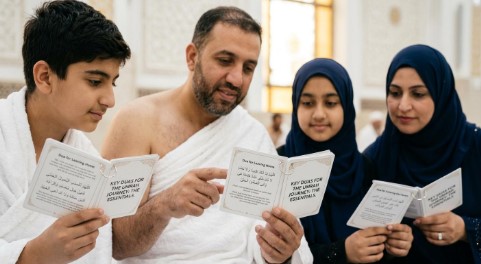
Preparing for Umrah is a journey of the heart long before it becomes a journey of the body. While flights, visas and hotels take up much of the planning, the most meaningful preparation is spiritual. Learning a handful of authentic supplications before you travel helps you arrive settled, focused and ready to make the most of every sacred moment. For those who take the time to memorise even a few duas, the pilgrimage becomes far richer and more personal.
This guide walks you through the key supplications to learn before setting off, along with simple advice on reciting them correctly. It is written for every pilgrim who wants to prepare properly, whether you are still comparing Umrah Deals or have already booked your trip and are turning your attention to the worship ahead. Wherever you are in your planning, these duas will serve you well.
Why learning duas before Umrah matters
Umrah is a deeply personal act of worship, and much of it involves quiet conversation with Allah. While there is no long list of compulsory memorised prayers, knowing the recommended supplications means you can focus on their meaning rather than fumbling with a booklet at every stage. Preparation brings calm, and calm brings presence.
Learning duas in advance also deepens your understanding. When you know what the words mean, each supplication becomes a heartfelt request rather than a string of unfamiliar sounds. This understanding transforms the entire experience, turning routine recitation into genuine devotion.
The dua for travelling
Every journey in Islam begins with remembrance of Allah, and Umrah is no exception. Before you set off, it is Sunnah to recite the traveller’s dua as you begin your journey:
“Subhanalladhi sakhkhara lana hadha wa ma kunna lahu muqrinin, wa inna ila rabbina lamunqalibun.”
This means: “Glory be to the One who has placed this at our service, and we could never have accomplished this by ourselves. And indeed, to our Lord we will surely return.”
Reciting this as you leave home, board your flight, or begin any leg of the trip is a beautiful reminder that the whole journey is a gift from Allah. Many pilgrims find that starting this way brings a sense of peace to what can otherwise be a stressful travel day.
The Talbiyah: the heart of Umrah
Once you enter the state of Ihram and make your intention, you begin reciting the Talbiyah. This is perhaps the most important phrase to learn by heart before you travel:
“Labbayk Allahumma labbayk, labbayka la sharika laka labbayk. Innal-hamda wan-ni’mata laka wal-mulk, la sharika lak.”
It means: “Here I am, O Allah, here I am. Here I am, You have no partner, here I am. Surely all praise, grace and dominion belong to You, and You have no partner.”
The Talbiyah is repeated often throughout the journey to Makkah. Men recite it aloud, while women say it softly. Learning it thoroughly before you travel means you can join in with confidence from the very first moment of your pilgrimage.
Duas during Tawaf and Sa’i
As you perform Tawaf around the Kaaba, there is no single fixed dua for each circuit. You are free to supplicate in your own words, recite Quran, or send blessings upon the Prophet ص. However, one verse is especially beloved and worth memorising for the space between the Yemeni Corner and the Black Stone:
“Rabbana atina fid-dunya hasanatan wa fil-akhirati hasanatan wa qina ‘adhaban-nar.”
“Our Lord, give us good in this world and good in the Hereafter, and protect us from the punishment of the Fire.”
During Sa’i, the walk between Safa and Marwah, you may raise your hands and make personal dua at the top of each hill. Preparing a short list of things you wish to pray for, for yourself, your family and the wider Ummah, helps you use these blessed moments fully rather than being lost for words.
Learning to recite correctly with Tajweed
Knowing the words is only half the task. Reciting them correctly, with proper pronunciation, gives each dua its full beauty and meaning. A small slip in a letter can change a word entirely, so it is well worth practising your recitation before you travel.
This is where structured learning makes a real difference. Taking a few online Quran and Arabic lessons in the weeks before your trip can sharpen your pronunciation and build your confidence. For families, learning the duas together is a lovely way to prepare, and children often memorise these short supplications quickly. Those planning to travel during the holiest month often begin their preparation early, and while they compare Cheap Ramadan Umrah Packages and sort the practical arrangements, dedicating a little time each evening to learning duas ensures the family arrives spiritually ready as well as organised. A calm, well-prepared household makes the whole journey more meaningful.
Duas for entering Makkah and seeing the Kaaba
Arriving in Makkah and setting eyes on the Kaaba for the first time is a moment many pilgrims never forget. While there is no single fixed supplication for that instant, it is a highly recommended time for personal dua, as it is a moment when prayers are hoped to be accepted.
Many pilgrims prepare by learning general supplications of praise and gratitude, so they are ready to pour out their hearts rather than standing speechless. Take a moment, raise your hands, and ask Allah for whatever weighs on your heart. This is one of the most precious opportunities of the entire journey.
Duas for entering Madinah
Most pilgrims extend their trip to visit Madinah, the city of the Prophet ص. Here the atmosphere is gentle and calm, and visitors spend their time in prayer at the Prophet’s Mosque and sending abundant blessings upon him.
Learning the words of salawat, the blessings upon the Prophet ص, before you travel means you can recite them with love and understanding as you stand in his radiant city. Many describe their time in Madinah as the most moving part of the whole trip, and being spiritually prepared helps you savour every moment.
Practical tips for learning duas before you travel
Memorising supplications need not be daunting. A few simple habits make it easy and enjoyable:
- Start early, ideally several weeks before departure, so the duas settle firmly in your memory.
- Learn the meaning alongside the words, as understanding aids both memory and devotion.
- Practise a little each day, rather than cramming, which helps the words stick.
- Use audio recordings of correct recitation to perfect your pronunciation.
- Learn as a family, turning preparation into a shared and joyful experience.
Consistency is the key. Even ten minutes a day in the run-up to your trip will leave you far better prepared than a last-minute rush at the airport.
Final thoughts
The duas of Umrah are your companions for one of the most meaningful journeys of your life. Learning them before you travel, understanding their meaning, and reciting them correctly turns your pilgrimage into a profound spiritual experience rather than a rushed sequence of rituals.
Begin early, learn a little each day, and prepare your heart as carefully as you prepare your suitcase. May Allah accept the Umrah of every pilgrim who sets out to His House, and may He make each journey a source of lasting peace and closeness to Him. Ameen.
Frequently asked questions
Do I have to memorise duas before performing Umrah?
No supplication is compulsory to memorise except what is needed within your obligatory prayers. However, learning the recommended duas greatly enriches the experience and helps you stay focused and calm.
Can I read duas from a book or phone during Umrah?
Yes, many pilgrims carry a small dua book or use an app, especially during Tawaf and Sa’i. There is nothing wrong with reciting from a written source if you have not memorised the words.
How can I improve my Arabic pronunciation before travelling?
Structured online Quran and Arabic classes are an excellent way to sharpen your recitation. Even a few weeks of lessons can noticeably improve your confidence and accuracy.
What is the most important dua to learn for Umrah?
The Talbiyah is the most essential phrase to know by heart, as you recite it repeatedly from the moment you enter Ihram until you begin your Tawaf.