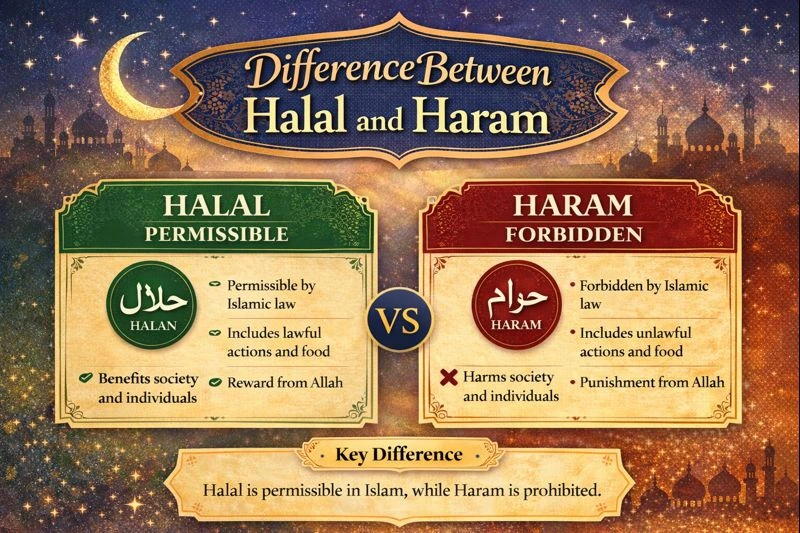
The difference between halal and haram is one of the most important concepts in Islam. These two terms guide Muslims in making everyday decisions about food, earnings, behavior, clothing, and lifestyle according to the teachings of Allah in the Quran and the Sunnah of Prophet Muhammad ﷺ.
Learning these rulings from authentic Islamic sources helps Muslims practice their faith with confidence. Through trusted Islamic learning platforms such as Noor Class, Muslims can deepen their understanding of Islamic teachings and apply them correctly in daily life.
In simple terms:
- Halal refers to everything Allah has permitted because it is beneficial and lawful.
- Haram refers to everything Allah has forbidden because it is harmful or sinful.
Understanding this distinction helps believers seek Allah’s pleasure and avoid actions that could harm their faith.
What Does Halal Mean in Islam?
The Arabic word halal (حلال) means permissible, lawful, or allowed. Anything declared halal by Allah may be used or practiced without sin.
Halal applies to every aspect of life, including:
- Food and drinks
- Business and earnings
- Clothing
- Marriage and family life
- Financial transactions
- Everyday behavior
Allah says:
“O mankind, eat from whatever is on earth that is lawful and good…”
(Surah Al-Baqarah 2:168)
This verse teaches that Muslims should seek not only what is lawful but also what is pure, wholesome, and beneficial.
What Does Haram Mean in Islam?
Haram (حرام) means forbidden or prohibited. It includes actions and things that Allah has clearly prohibited in the Quran or that the Prophet ﷺ prohibited in authentic Hadith.
Examples of haram include:
- Pork and pork products
- Alcohol and intoxicants
- Interest (Riba)
- Gambling
- Theft and fraud
- Adultery and immoral behavior
Allah says:
“He has only forbidden to you dead animals, blood, the flesh of swine, and that which has been dedicated to other than Allah…”
(Surah Al-Baqarah 2:173)
A Muslim should avoid haram because obedience to Allah brings success in this life and the Hereafter.
Why Does Islam Distinguish Between Halal and Haram?
Allah’s commands are based on His perfect wisdom. The distinction between halal and haram protects both individuals and society.
Some of the wisdom behind these rulings includes:
- Protecting physical health
- Preserving moral character
- Safeguarding wealth
- Promoting justice
- Strengthening faith
- Encouraging cleanliness and purity
- Building a righteous society
The Prophet Muhammad ﷺ said:
“The halal is clear and the haram is clear, and between them are doubtful matters…”
(Sahih al-Bukhari & Sahih Muslim)
This famous hadith teaches Muslims to avoid doubtful matters to protect their religion and honor.
Foods Mentioned in the Quran: Halal and Haram
The Quran clearly identifies several foods that are lawful and unlawful for Muslims.
Foods Mentioned in the Quran
| Food | Ruling |
|---|---|
| Cattle (cow, sheep, goat) | Halal |
| Fish and seafood | Halal |
| Fruits and vegetables | Halal |
| Milk and honey | Halal |
| Animals slaughtered properly in Allah’s name | Halal |
| Dead animals (carrion) | Haram |
| Flowing blood | Haram |
| Pork | Haram |
| Animals dedicated to other than Allah | Haram |
| Intoxicants (Alcohol) | Haram |
Allah says:
“Forbidden to you are dead animals, blood, the flesh of swine…”
(Surah Al-Ma’idah 5:3)
These verses establish the foundation of Islamic dietary laws.
Foods Mentioned in the Hadith
The Sunnah explains additional dietary rulings that complement the Quran.
Foods Mentioned in the Hadith
| Food | Ruling | Source |
| Carnivorous animals with fangs | Haram | Sahih Muslim |
| Birds with talons | Haram | Abu Dawood |
| Domestic donkey meat | Haram | Sahih al-Bukhari |
| Predatory animals | Haram | Sahih Muslim |
| Locusts | Halal | Ibn Majah |
The Hadith provides practical guidance for situations not explained in detail in the Quran.
Halal Foods vs Haram Foods
The following table summarizes common examples.
| Halal Foods | Haram Foods |
| Properly slaughtered meat | Pork and pork products |
| Fish and seafood | Alcohol and intoxicants |
| Fruits and vegetables | Blood |
| Milk and dairy | Dead animals |
| Honey | Meat sacrificed to idols |
| Grains and legumes | Animals not slaughtered according to Islamic guidelines |
Halal and Haram Beyond Food
Many people associate halal and haram only with food, but Islam applies these principles to every part of life.
Halal Examples
- Honest business
- Lawful employment
- Charity
- Truthfulness
- Modesty
- Respecting parents
- Keeping promises
Haram Examples
- Interest (Riba)
- Bribery
- Fraud
- Lying
- Backbiting
- Gambling
- Oppression
- Stealing
A Muslim strives to choose halal in every aspect of life—not only in eating but also in speech, finances, relationships, and character.
How Can You Tell if Something Is Halal or Haram?
If Muslims are uncertain about an issue, they should:
- Refer to the Quran.
- Consult authentic Hadith.
- Ask qualified Islamic scholars.
- Avoid doubtful matters until clarity is found.
This careful approach protects one’s faith and prevents falling into prohibited actions.
Benefits of Choosing Halal
Choosing halal brings many spiritual and worldly benefits.
These include:
- Earning Allah’s pleasure
- Increasing barakah (blessings)
- Strengthening faith
- Bringing peace of mind
- Maintaining purity of heart
- Protecting physical and spiritual well-being
- Preparing for success in the Hereafter
Likewise, avoiding haram protects believers from harmful consequences in both this life and the next.
Conclusion
The difference between halal and haram is a fundamental part of Islamic life. Allah has clearly explained what is lawful and what is forbidden through the Quran, while the Prophet Muhammad ﷺ further clarified these rulings through authentic Hadith.
Whether choosing food, earning a living, conducting business, or interacting with others, Muslims are encouraged to follow halal and avoid haram. By doing so, they strengthen their relationship with Allah, gain His blessings, and work toward success in both this world and the Hereafter.
Understanding these principles allows every Muslim to make informed, faith-centered decisions with confidence.
Frequently Asked Questions (FAQs)
Is everything halal unless proven haram?
Yes. One of the basic principles in Islamic law is that everything is considered permissible unless there is clear evidence from the Quran or authentic Sunnah declaring it forbidden.
Can halal and haram apply to money?
Yes. Islam requires Muslims to earn through lawful means. Income from fraud, theft, bribery, gambling, or interest (riba) is considered haram.
Is seafood always halal?
Most scholars consider all seafood to be halal based on the Quran, although some schools of Islamic jurisprudence have specific rulings regarding certain sea creatures.
Why should Muslims avoid doubtful matters?
The Prophet ﷺ encouraged Muslims to stay away from doubtful matters because doing so protects their faith and prevents them from unintentionally falling into haram.