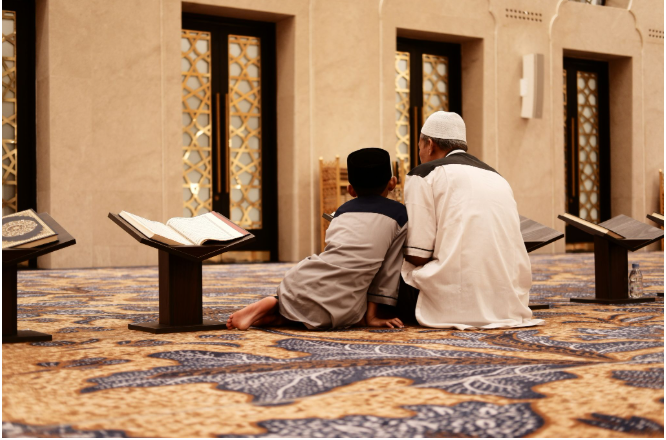
This is a question that thousands of Muslim parents across the USA, UK, Canada, and Australia are asking right now. Traditional mosque classes have been the backbone of Quranic education for generations. But online Quran learning has grown remarkably in quality and accessibility and many families are finding it superior in almost every measurable way.
This article compares both approaches honestly, so you can make the most informed decision for your child.
What Traditional Mosque Classes Offer
Mosque-based Quran classes have real advantages. They offer a sense of community, a physical Islamic environment, and face-to-face interaction with a teacher. Children develop friendships with other Muslim children and grow up with a tangible connection to their local masjid.
For families who live close to a mosque with qualified teachers and manageable class sizes, traditional classes can work well particularly for younger children who benefit from socialisation.
The Limitations of Traditional Mosque Classes
However, for many Western Muslim families, traditional mosque classes present serious practical challenges:
- Large class sizes: Many mosque classes have 10 to 25 students per teacher. Individual attention is limited, and children who struggle may not receive the correction they need.
- Fixed, inflexible schedules: Classes typically run on weekday evenings or weekend mornings, which often clash with school homework time, sports, or family commitments.
- Inconsistent teacher quality: Not all mosque teachers hold formal Tajweed or Quranic qualifications. Some are volunteers with limited training.
- Travel and logistics: Driving children to and from mosque classes several times a week is time-consuming and tiring for parents.
- Gender-matching limitations: Many mosques do not have female teachers for girls, which is a significant concern for Muslim families who prioritise gender-appropriate education.
- Geographical limitations: Families in areas with small Muslim populations may have no qualified Quran teacher within a reasonable distance.
What Online Quran Classes Offer
When families choose to learn Quran online, they gain access to something that traditional classes simply cannot match: a fully personalised, one-on-one learning experience with a certified teacher, delivered at a time and place that suits the family perfectly.
Here is a direct comparison across the most important factors:
1. Teacher Quality
Reputable online Quran academies hire Hafiz, Qari, and Alim-certified teachers who have graduated from formal Islamic universities. Every teacher undergoes a vetting process covering qualifications, teaching experience, English ability, and character. The bar is typically higher than what many local mosques can offer.
2. Class Size and Attention
Online classes are almost always one-on-one. Your child has the teacher’s complete, undivided attention for the full duration of every session. Mistakes are caught and corrected immediately. Progress is consistent and measurable.
3. Scheduling Flexibility
Online classes can be scheduled at any time morning, afternoon, evening, or weekend around school timetables, extracurricular activities, and family life. There are no rigid timetables to conform to.
4. Gender-Appropriate Teaching
A good online academy offers both male and female certified tutors. Parents can ensure their daughters are taught exclusively by female teachers, a straightforward choice that many local mosques cannot accommodate.
5. Progress Monitoring
Online academies typically provide monthly progress reports to parents, detailing exactly what was covered, what needs improvement, and what the next learning targets are. This level of transparency is rare in traditional mosque settings.
6. Cost
When you factor in fuel, time, and any associated mosque fees, traditional classes often cost more than they appear. Online Quran classes at reputable academies are transparent and affordable. You can view structured monthly fee plans starting from as little as $30 per month with no hidden charges.
Which Courses Are Available Online?
Online academies offer the full range of Quranic education that any madrasa would, and often more:
- Noorani Qaida for complete beginners
- Quran Reading with Tajweed for all levels
- Quran Memorization (Hifz) with structured daily supervision
- Quran Translation word-by-word meaning in English and Urdu
- Tafseer in-depth scholarly commentary
So Which Is Better?
For families living in the West where qualified local teachers are scarce, schedules are demanding, and personalised attention is a priority, online Quran learning is, in most cases, the superior choice.
It is not about replacing the mosque. Children should still attend Friday prayers, community events, and Islamic gatherings. But for formal Quran education, a certified online tutor providing one-on-one, flexible, expert-led sessions simply offers more than the average mosque class can.
Try It for Free
The best way to judge is to experience it. Register for a free trial class and let your child sit with a certified tutor for a full session at no cost and with no commitment. See the difference first-hand. You can also explore the full range of available Quran courses to find the right fit for your child’s current level.