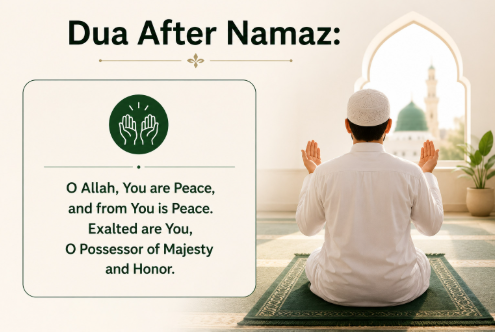
Prayer (Salah) is the second pillar of Islam and one of the greatest acts of worship. Every day, Muslims stand before Allah five times, seeking His mercy, forgiveness, and guidance. However, the blessings of salah do not end when we say As-salamu Alaikum wa Rahmatullah. The moments immediately after prayer are also filled with opportunities to remember Allah and make sincere supplications.
Many Muslims search for the correct dua after namaz because they want to follow the authentic teachings of the Quran and Sunnah rather than cultural practices. The Prophet Muhammad ﷺ consistently remembered Allah after every obligatory prayer and taught his companions beautiful supplications that remain a source of guidance for Muslims today.
Whether you are a beginner learning the daily adhkar or someone looking to strengthen your worship, this guide explains the authentic duas after salah, their meanings, virtues, and the best way to include them in your daily routine.
What Is Dua After Namaz?
Dua after namaz refers to the supplications (dua) and words of remembrance (dhikr) that a Muslim recites after completing the obligatory or voluntary prayers. These include authentic phrases taught by the Prophet Muhammad ﷺ, such as seeking forgiveness, glorifying Allah, reciting Ayat al-Kursi, and making personal supplications.
These remembrances help complete the act of worship, strengthen faith, and keep the believer connected to Allah throughout the day.
Quick Summary
- Say Astaghfirullah three times after every prayer.
- Recite Allahumma Antas-Salam wa Minkas-Salam.
- Read Ayat al-Kursi after each obligatory prayer.
- Recite SubhanAllah 33 times.
- Recite Alhamdulillah 33 times.
- Recite Allahu Akbar 34 times.
- Recite the declaration of Tawheed.
- Make personal dua for your needs.
- Follow authentic teachings from the Quran and Sunnah.
Why Is Dua After Namaz Important?
Allah commands believers to continue remembering Him even after completing prayer.
“When you have completed the prayer, remember Allah while standing, sitting, and lying on your sides.”
(Surah An-Nisa 4:103)
Allah also says:
“So remember Me; I will remember you. And be grateful to Me and do not deny Me.”
(Surah Al-Baqarah 2:152)
These verses show that salah is not the end of worship. Rather, it is the beginning of continuous remembrance of Allah. The Prophet Muhammad ﷺ would remain seated after prayer, remembering Allah through authentic supplications before attending to worldly affairs.
Making dua after salah allows believers to express gratitude, seek forgiveness, and ask Allah for guidance while their hearts are still focused on worship.
Authentic Dua After Namaz According to the Sunnah
The Prophet Muhammad ﷺ taught several authentic supplications to recite after every prayer. These have been preserved in authentic collections of Hadith.
1. Seek Allah’s Forgiveness
Immediately after finishing the prayer, the Prophet ﷺ would say:
Arabic
أَسْتَغْفِرُ اللَّهَ (Three times)
Transliteration
Astaghfirullah
Meaning
“I seek Allah’s forgiveness.”
Why Is It Recited?
Although salah is one of the greatest acts of worship, no person’s prayer is perfect. Seeking forgiveness reminds us of our shortcomings and asks Allah to accept our worship despite our mistakes.
This practice teaches humility and encourages believers never to rely solely on their own deeds but always on Allah’s mercy.
2. Allahumma Antas-Salam
After saying Astaghfirullah three times, the Prophet ﷺ would recite:
Arabic
اللَّهُمَّ أَنْتَ السَّلَامُ وَمِنْكَ السَّلَامُ تَبَارَكْتَ يَا ذَا الْجَلَالِ وَالإِكْرَامِ
Transliteration
Allahumma antas-salam wa minkas-salam tabarakta ya dhal-jalali wal-ikram.
Meaning
“O Allah, You are Peace, and from You comes peace. Blessed are You, Owner of Majesty and Honor.”
Benefits
This beautiful supplication reminds Muslims that true peace does not come from wealth, status, or worldly success. Real peace comes only from Allah.
Reciting this dua after every salah helps believers develop reliance upon Allah during both ease and hardship.
3. Recite Ayat al-Kursi
One of the greatest remembrances after obligatory prayer is Ayat al-Kursi (Surah Al-Baqarah 2:255).
The Prophet ﷺ said:
“Whoever recites Ayat al-Kursi after every obligatory prayer, nothing stands between him and entering Paradise except death.”
This hadith demonstrates the immense reward of making Ayat al-Kursi part of your daily routine.
Ayat al-Kursi reminds believers of Allah’s absolute power, knowledge, and authority over the heavens and the earth. Regular recitation strengthens faith and increases awareness of Allah throughout the day.
4. Tasbeeh of Fatimah
Among the easiest and most rewarding forms of remembrance is the Tasbeeh taught by the Prophet ﷺ.
| Phrase | Number of Times |
|---|---|
| SubhanAllah | 33 |
| Alhamdulillah | 33 |
| Allahu Akbar | 34 |
Meaning
- SubhanAllah – Glory be to Allah.
- Alhamdulillah – All praise belongs to Allah.
- Allahu Akbar – Allah is the Greatest.
These simple words take only a few minutes to complete but carry enormous rewards. They remind believers to glorify Allah, appreciate His blessings, and acknowledge His greatness after every prayer.
5. Declaration of Tawheed
Another authentic remembrance is:
Arabic
لَا إِلٰهَ إِلَّا اللّٰهُ وَحْدَهُ لَا شَرِيكَ لَهُ، لَهُ الْمُلْكُ وَلَهُ الْحَمْدُ وَهُوَ عَلَىٰ كُلِّ شَيْءٍ قَدِيرٌ
Transliteration
La ilaha illallahu wahdahu la sharika lahu, lahul mulku wa lahul hamdu wa huwa ala kulli shay’in qadeer.
Meaning
“There is no deity worthy of worship except Allah alone. He has no partner. His is the Kingdom, His is all praise, and He has power over everything.”
This powerful statement renews a Muslim’s belief in Tawheed and reminds the believer that all authority and blessings belong to Allah alone.
Can You Make Personal Dua After Namaz?
Yes. After completing the prescribed adhkar taught by the Prophet ﷺ, Muslims may make personal supplications and ask Allah for anything beneficial in this life and the Hereafter.
Allah loves His servants to call upon Him with sincerity and humility.
Some common personal duas include asking Allah for:
- Forgiveness of sins
- Guidance on the straight path
- Strong faith
- Good health
- Halal sustenance
- Success in education or work
- A righteous spouse
- Righteous children
- Relief from anxiety and stress
- Protection from illness
- Ease in financial hardship
- Acceptance of good deeds
- Entry into Jannah
- Protection from Hellfire
One of the beautiful aspects of Islam is that personal duas may be made in any language. While the authentic Arabic supplications from the Sunnah carry great virtue, Allah understands every sincere prayer regardless of the language in which it is spoken.
For example, a student may ask Allah for success before examinations, a parent may pray for the guidance and safety of their children, and someone facing financial difficulties may ask Allah to provide lawful sustenance and ease.
The key is sincerity, humility, and complete trust in Allah’s wisdom.
Is It Better to Make Dua Before or After Salam?
Scholars explain that one of the best times for personal supplication is before ending the prayer with tasleem, especially during the final sitting (Tashahhud). Numerous authentic hadith indicate that the Prophet ﷺ encouraged believers to make dua before saying salam.
However, this does not mean making dua after prayer is forbidden. Rather, after completing the prescribed adhkar, a Muslim may also continue remembering Allah and ask Him for personal needs.
Therefore, both are permissible, with the dua made before salam having particular emphasis in the Sunnah.
Spiritual Benefits of Making Dua After Namaz
Developing the habit of remembering Allah after every salah brings countless spiritual rewards. While these supplications may take only a few minutes, they can have a lasting impact on a believer’s faith, character, and daily life.
1. It Completes Your Worship
Salah is the greatest daily act of worship, but remembering Allah after prayer helps complete it in the manner taught by the Prophet Muhammad ﷺ. The prescribed adhkar act as a beautiful conclusion to salah, allowing believers to end their prayer with gratitude, praise, and remembrance.
Rather than rushing back to worldly responsibilities, spending a few moments in dhikr keeps the heart connected to Allah.
2. It Brings Forgiveness
Every person makes mistakes, even while praying. We may lose concentration, become distracted, or rush through parts of the prayer.
That is why the Prophet ﷺ sought Allah’s forgiveness immediately after every salah by saying Astaghfirullah three times.
This teaches Muslims that no matter how good their worship appears, they should always seek Allah’s mercy and acceptance.
3. It Strengthens Faith (Iman)
Every remembrance after prayer reminds believers of Allah’s greatness.
Reciting phrases such as:
- SubhanAllah
- Alhamdulillah
- Allahu Akbar
fills the heart with gratitude and increases awareness of Allah throughout the day.
The more a believer remembers Allah, the stronger their faith becomes.
4. It Brings Peace to the Heart
Modern life is often filled with stress, anxiety, deadlines, and constant distractions.
Allah says:
“Verily, in the remembrance of Allah do hearts find rest.”
(Surah Ar-Ra’d 13:28)
Taking just a few minutes after every prayer to remember Allah helps calm the heart and provides emotional comfort during difficult times.
5. It Protects Against Shaytan
Regular remembrance strengthens the believer spiritually.
A heart occupied with dhikr is less vulnerable to the whispers of Shaytan and worldly distractions. Making remembrance after every salah creates a daily shield that helps Muslims remain mindful of Allah in their actions and decisions.
6. It Increases Gratitude
The words Alhamdulillah remind Muslims that every blessing—health, family, wealth, knowledge, and guidance—comes from Allah.
Developing gratitude leads to greater contentment and protects the heart from envy and dissatisfaction.
7. It Builds Consistency in Worship
One of the most beloved deeds to Allah is a good deed that is performed consistently, even if it is small.
Reciting the same authentic adhkar after every prayer helps establish a lifelong habit of remembering Allah.
Over time, these few minutes become one of the most cherished parts of daily worship.
Can You Raise Your Hands After Dua?
This is a common question among Muslims.
Scholars have discussed this issue based on authentic narrations.
There is no authentic evidence showing that the Prophet Muhammad ﷺ regularly raised his hands after every obligatory prayer as a fixed practice.
However, raising the hands during dua is generally established in many other situations and is a means of expressing humility before Allah.
Therefore:
- Making dua after salah is permissible.
- Raising the hands occasionally is permissible.
- Believing that raising the hands after every obligatory prayer is compulsory or a regular Sunnah is not supported by authentic evidence.
The safest approach is to follow the practice of the Prophet ﷺ by reciting the prescribed adhkar after prayer and avoiding innovations in worship.
Common Mistakes People Make After Namaz
Although making dua after salah is encouraged, some common practices should be avoided to ensure worship remains in accordance with the Quran and Sunnah.
1. Leaving Immediately After Salam
Many people finish the prayer and immediately begin talking, checking their phones, or returning to work.
Doing so causes them to miss the valuable moments of remembrance taught by the Prophet ﷺ.
Even spending two or three extra minutes after salah can bring immense rewards.
2. Thinking Certain Duas Are Obligatory
Some Muslims believe that a particular supplication must be recited after every prayer.
In reality, the authentic adhkar are highly recommended (Sunnah), but reciting every supplication is not obligatory.
Islam is a religion of ease, and believers should avoid making voluntary acts seem compulsory.
3. Following Unverified Supplications
Social media often circulates duas with promises of extraordinary rewards that have no authentic basis.
Whenever learning a new supplication, verify it through reliable sources such as:
- The Quran
- Sahih al-Bukhari
- Sahih Muslim
- Authentic books of adhkar
- Trusted scholars
Following authentic teachings protects a Muslim from unknowingly practicing weak or fabricated narrations.
4. Rushing Through the Adhkar
Some people recite the prescribed phrases so quickly that they barely reflect on their meanings.
The purpose of dhikr is not simply counting words but remembering Allah with sincerity and understanding.
Take your time and reflect on what you are saying.
5. Limiting Dua to Arabic Only
While the authentic Arabic supplications taught by the Prophet ﷺ are highly recommended, personal requests may be made in any language.
Allah knows every language and hears every sincere prayer.
Do not hesitate to ask Allah for your needs in words you understand.
A Simple Daily Routine After Every Salah
If you are beginning to learn the Sunnah adhkar, start with this easy routine:
Step 1
Say:
Astaghfirullah ×3
Step 2
Recite:
Allahumma antas-salam wa minkas-salam tabarakta ya dhal-jalali wal-ikram.
Step 3
Recite Ayat al-Kursi.
Step 4
Say:
- SubhanAllah ×33
- Alhamdulillah ×33
- Allahu Akbar ×34
Step 5
Recite:
La ilaha illallahu wahdahu la sharika lahu, lahul mulku wa lahul hamdu wa huwa ala kulli shay’in qadeer.
Step 6
Make personal dua for yourself, your family, the Muslim Ummah, and for success in this life and the Hereafter.
This complete routine usually takes only five to seven minutes, yet its rewards are immense.
A Practical Example
Imagine a Muslim who performs Fajr before leaving for work.
Instead of immediately checking messages or scrolling through social media, they remain seated for a few minutes. They seek Allah’s forgiveness, recite Ayat al-Kursi, complete the prescribed tasbeeh, and ask Allah to bless their day, protect their family, and grant them halal sustenance.
This simple habit transforms the beginning of the day. Rather than starting with distraction, it begins with remembrance, gratitude, and reliance on Allah.
Similarly, after Maghrib or Isha, these few moments of dhikr can help a person reflect on the day’s blessings, seek forgiveness for mistakes, and prepare their heart for the next prayer.
Authentic Sources for Learning Dua After Namaz
When learning Islamic supplications, always rely on authentic and trustworthy sources.
Some of the best references include:
- The Holy Quran
- Sahih al-Bukhari
- Sahih Muslim
- Jami’ at-Tirmidhi
- Sunan Abu Dawud
- An-Nasa’i
- Riyad as-Salihin
- Hisnul Muslim (Fortress of the Muslim)
These sources preserve the authentic supplications taught by the Prophet Muhammad ﷺ and help Muslims practice their faith with confidence.
Conclusion
The moments after salah are a precious opportunity to remain connected with Allah through authentic remembrance and sincere supplication. By following the Sunnah of the Prophet Muhammad ﷺ, believers can transform every prayer into a complete act of worship that continues even after the tasleem.
Simple adhkar such as seeking forgiveness, reciting Allahumma Antas-Salam, reading Ayat al-Kursi, and glorifying Allah with SubhanAllah, Alhamdulillah, and Allahu Akbar require only a few minutes but carry tremendous rewards.
Consistency is more important than length. Even if you begin with just one or two authentic supplications, making them a regular part of your routine can strengthen your faith, bring peace to your heart, and deepen your relationship with Allah.
May Allah accept our prayers, forgive our shortcomings, and make us among those who constantly remember Him. Ameen.
Frequently Asked Questions (FAQs)
What is the best dua after namaz?
The best duas after namaz are the authentic supplications taught by the Prophet Muhammad ﷺ. These include saying Astaghfirullah three times, reciting Allahumma Antas-Salam, reading Ayat al-Kursi, performing the prescribed tasbeeh, and making sincere personal dua.
Is making dua after salah compulsory?
No. Personal dua after salah is not obligatory. However, the authentic adhkar after prayer are highly recommended and were practiced regularly by the Prophet ﷺ.
Can I make dua in English after namaz?
Yes. While the Sunnah duas are in Arabic, Muslims may ask Allah for their personal needs in any language they understand. Allah hears every sincere supplication.
Is Ayat al-Kursi recommended after every prayer?
Yes. Authentic narrations encourage reciting Ayat al-Kursi after every obligatory prayer because of its great virtues and rewards.
Can women recite the same duas after namaz?
Yes. The prescribed adhkar after prayer are the same for both men and women. Every Muslim is encouraged to remember Allah after salah.
How long should I spend after salah?
There is no fixed time. Even two to five minutes spent in authentic remembrance can bring great blessings. Consistency is more important than duration.
Is it better to make dua before or after salam?
Many authentic hadith indicate that making personal dua before the tasleem is among the best times for supplication. However, remembering Allah and making personal dua after salah is also permissible.
Can I read the duas from my phone?
Yes. If you are still memorizing the adhkar, it is perfectly acceptable to read them from a phone or a printed booklet until you learn them by heart.
Can children learn these supplications?
Absolutely. Teaching children the authentic adhkar after salah from an early age helps them develop a lifelong habit of remembering Allah and following the Sunnah.
What is the difference between dhikr and dua?
Dhikr refers to prescribed words of remembrance, such as SubhanAllah, Alhamdulillah, and Allahu Akbar. Dua refers to personally asking Allah for your needs, forgiveness, guidance, and blessings. Both are encouraged after salah and together complete a beautiful act of worship.