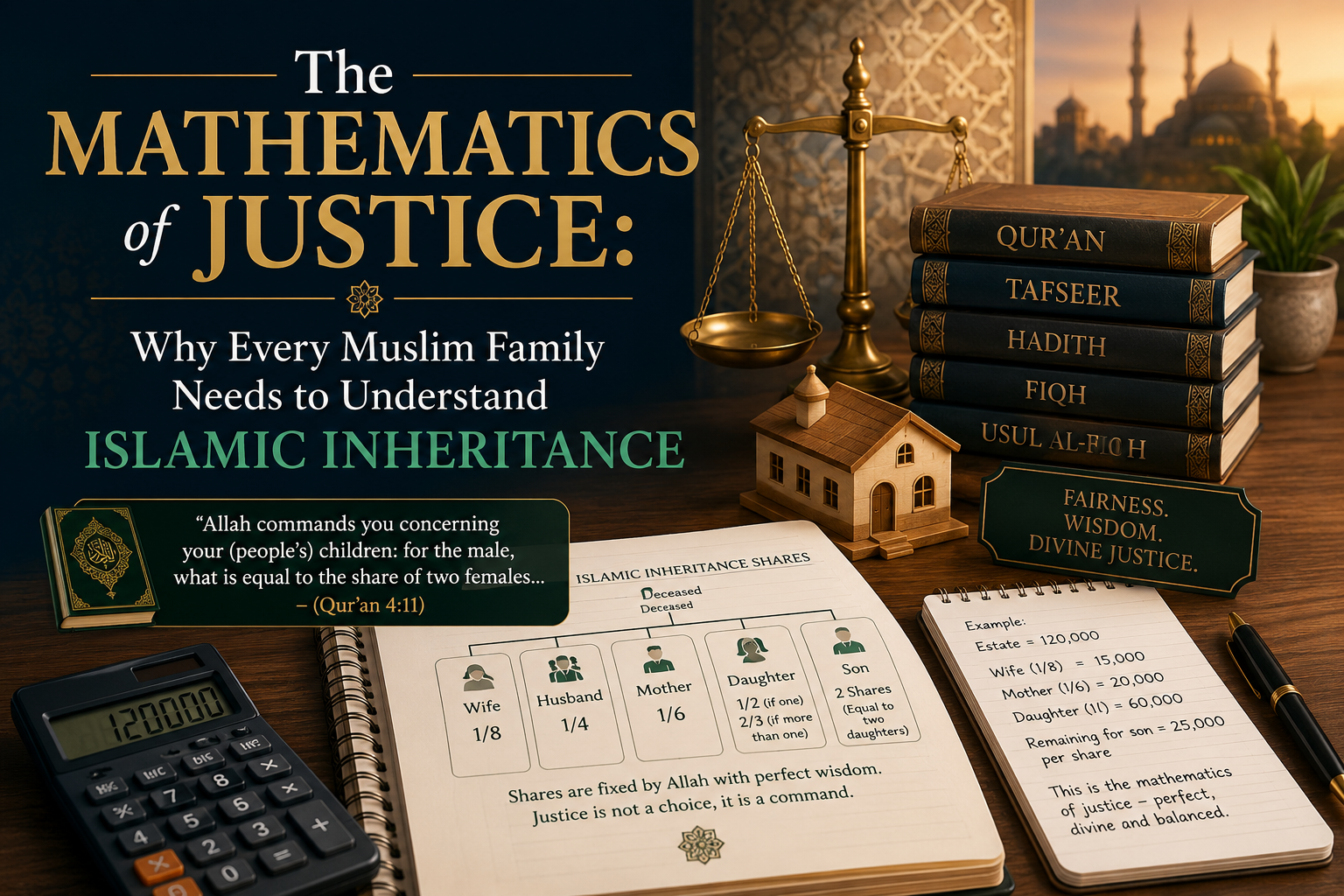
Talking about death, estate planning, and inheritance is never easy. In many Muslim families, these topics are avoided because they feel uncomfortable or morbid. However, preparing for the future and ensuring your assets are distributed in accordance with Islamic law is not just a financial responsibility—it is a spiritual obligation.
The system of Islamic inheritance, known as Mirath, is one of the most detailed and comprehensive legal frameworks in the Quran. It is a system designed by Divine wisdom to ensure justice, protect vulnerable family members, and prevent family disputes after a loved one passes away.
The Prophet Muhammad (peace be upon him) emphasized the importance of this science, saying:”Learn the laws of inheritance and teach them, for it is half of knowledge.” (Sunan Ibn Majah)
Here is why understanding and preparing for Islamic inheritance is critical for every Muslim family, and how modern tools make this complex task simple.
1. The Divine Philosophy of Mirath: Preventing Conflict
Inheritance disputes are among the leading causes of long-term family estrangement worldwide. When a relative passes away without a clear, legally binding plan, grieving family members often struggle over who gets what.
Islamic law eliminates this ambiguity by pre-determining the exact shares of heirs directly in the Quran, primarily in Surah An-Nisa.
- Automatic Distribution: Unlike Western legal systems where a person can disinherit children or spouses entirely, Shariah sets fixed, mandatory portions for immediate relatives including spouses, parents, and children.
- Protection of Vulnerable Members: The Quran ensures that widows, daughters, and elderly parents receive their fair shares, preventing stronger relatives from taking control of the estate.
By adopting this system, families submit to a divine division of wealth, reducing human bias and emotional arguments.
2. The Distinction Between the Will (Wasiyyah) and Mirath
A common point of confusion for Muslims living in non-Muslim countries is the difference between an Islamic Will (Wasiyyah) and the fixed shares of Mirath.
- Fixed Shares (Mirath): The bulk of your estate must be distributed to your legal Quranic heirs in the exact percentages mandated by Shariah.
- The Bequest (Wasiyyah): You are permitted to designate up to a maximum of one-third of your estate to non-inheritors, such as charity or non-heir relatives. This is the only portion you have free control over.
To implement this correctly in non-Muslim legal jurisdictions, you must have a legally binding Will drafted that explicitly instructs your executors to distribute your estate according to Islamic inheritance laws. Without this legal document, local state laws will distribute your wealth according to non-Islamic probate guidelines.
3. Integrating Inheritance and Zakat Planning
Islamic inheritance is part of a broader financial ecosystem in Islam that includes Zakat and Sadaqah. Both Zakat and inheritance require precise calculations of assets and liabilities.
- Calculating Zakat Annually: Knowing your net worth and calculating your Zakat (2.5% of net wealth above the Nisab threshold) is essential to keeping your wealth pure. Just as inheritance requires an audit of your assets, Zakat requires you to track your cash, gold, investments, and business stock. Using a dedicated Zakat Calculator helps you perform these calculations easily each year.
- Clearing Debts First: Under Islamic law, before inheritance is distributed, necessary steps must be taken including paying funeral expenses and settling all outstanding debts.
4. How Modern Technology Simplifies Shariah Calculations
The mathematics of Mirath is famous for its complexity. The shares of heirs can shift depending on which relatives are alive at the time of death.
Historically, this required consulting a specialized scholar. Today, technology has made this accessible to everyone.
- Real-time Math: By inputting your surviving relatives and estate details, you can instantly see the expected distribution.
- Interactive Calculators: Using tools like the Islamic Inheritance Calculator allows families to run educational scenarios and understand the distribution before consulting legal counsel.
- Yearly Spiritual Audits: Use the Islamic Calendar to mark specific dates each year—such as during Ramadan or Muharram—to review your assets and pay your Zakat.
Conclusion: A Legacy of Peace and Obedience
Estate planning is not just about numbers; it is about leaving behind a legacy of peace, harmony, and obedience to Allah. By taking the time to understand Islamic inheritance laws, writing a compliant Will, and utilizing calculators to plan ahead, you protect your family from legal confusion and division, ensuring that your wealth continues to be a source of blessing long after you are gone. Just as Face Shape Matters when making personal decisions about style and appearance, careful planning also matters when making important financial and family decisions. Both require thoughtful consideration to achieve the best long-term outcome.