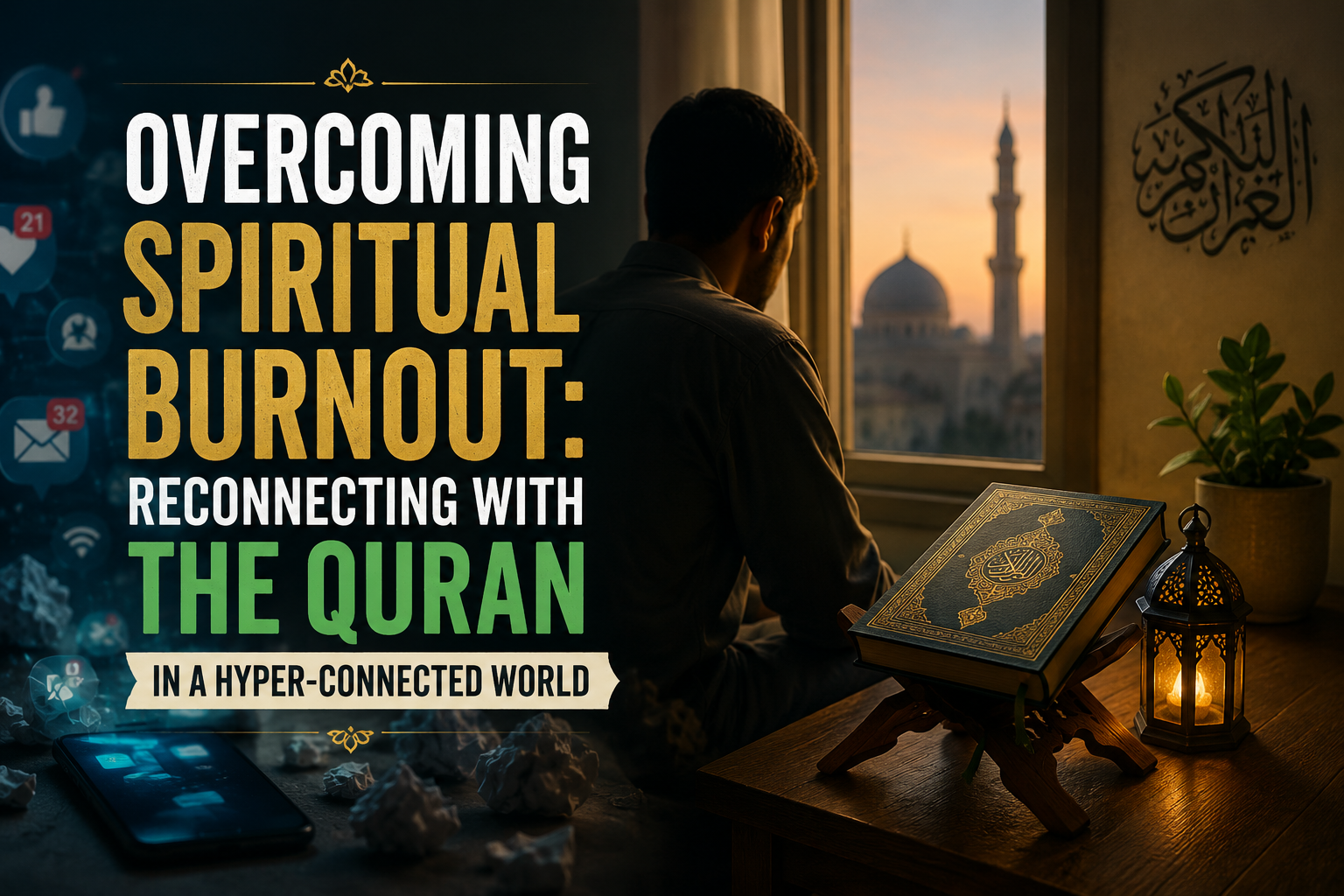
We live in an age of constant connectivity. From the moment we wake up and check our phones to the late-night doomscrolling before sleep, our minds are bombarded with news, notifications, memes, and short-form videos. While this digital landscape keeps us informed, it also creates a unique modern malady: attention fragmentation.
For many young Muslims, this constant sensory overload leads directly to spiritual burnout. We find ourselves sitting down to pray, only for TikTok transitions to replay in our minds. We want to read the Quran, but our attention spans are so depleted that we struggle to finish a single page without reaching for our phones. The resulting guilt creates a wall between us and our faith.
If you are feeling spiritually drained, exhausted, or disconnected, know that you are not alone. Reclaiming your spiritual heart is not about running away to a mountain; it is about building intentional boundaries and using the Quran as a daily anchor.
Here is how to overcome spiritual burnout in a hyper-connected world.
1. Recognize the Symptoms of Spiritual Burnout
Spiritual burnout doesn’t happen overnight; it is a slow depletion of our inner reservoir. Common signs include:
- The “Lethargic Salah”: Delaying prayers until the last minute and rushing through the movements without any focus (Khushu).
- Guilt-Induced Avoidance: Feeling so guilty about your sins or lack of practice that you avoid opening the Quran or visiting the mosque altogether.
- Cynical Screen Reliance: Using social media and entertainment as a coping mechanism to escape stress, which only worsens your attention span and mental fatigue.
Understanding that this is a symptom of environmental distraction—not a sign that you are a “bad Muslim”—is the first step toward recovery.
2. Implement a “Digital Wudu” (Purifying Your Attention)
Just as we wash our bodies to prepare for prayer, we must cleanse our minds to prepare for spiritual reflection.
Before you open the Quran or stand up to pray, practice a 5-minute digital detox:
- Out of Sight: Put your phone in another room or place it on “Do Not Disturb” face down. If it is next to you, your brain is still actively expending energy to resist checking it.
- The Breath Transition: Sit quietly for two minutes. Inhale deeply and focus on clearing your mind of the last post you read. Acknowledge that this time belongs to Allah, and the Dunya can wait.
3. Replace Rote Routines with Mindful Consistency
When we are burnt out, trying to read a full chapter (Juz) of the Quran will feel impossible and lead to frustration. Instead, leverage the power of small, consistent habits.
The Prophet Muhammad (peace be upon him) taught us that the most beloved actions to Allah are those that are consistent, even if they are small.
- The Micro-Habit Strategy: Commit to reading just three verses a day with translation. Do not let yourself miss a single day.
- Visual Tracking: Use digital habit tools to keep yourself accountable. Keeping track of your prayers and reading using a Daily Islamic Habit Tracker provides a visual sense of progress that helps rebuild your spiritual momentum. Aligning your routine with an interactive Islamic Calendar can also help children and adults understand the rhythm of Islamic life.
4. Gamify and Diversify Your Learning
When your attention span is short, traditional reading isn’t the only way to build a connection. You can use interactive, gamified platforms to spark your interest and learn about your faith.
- Faith Trivia: Challenge your friends or family to test their Islamic knowledge. Using resources like Interactive Quran Quizzes makes learning about Islamic history, the stories of the Prophets, and Quranic structure feel engaging rather than burdensome.
- Morning and Evening Routines: Keep your spiritual shield active with short, regular supplications. Checking in with a curated Daily Adhkar and Duas guide keeps your tongue moist with the remembrance of Allah throughout the day.
- Structured Mentorship: While self-study tools are incredible aids, they often cannot replace the accountability provided by a qualified teacher. Partnering with native, Al-Azhar certified tutors ensures you are learning with proper Tajweed and deep textual reflection.
Conclusion: Returning to the Anchor
The noise of the digital world is not going away. If we do not actively build a fortress around our hearts, our attention and our faith will be swept away by the current of algorithms. The Quran is not just a book to be finished; it is a sanctuary to be entered. By setting small boundaries, tracking your progress, and making your learning interactive, you can escape spiritual burnout and find the peace and clarity your heart is searching for.