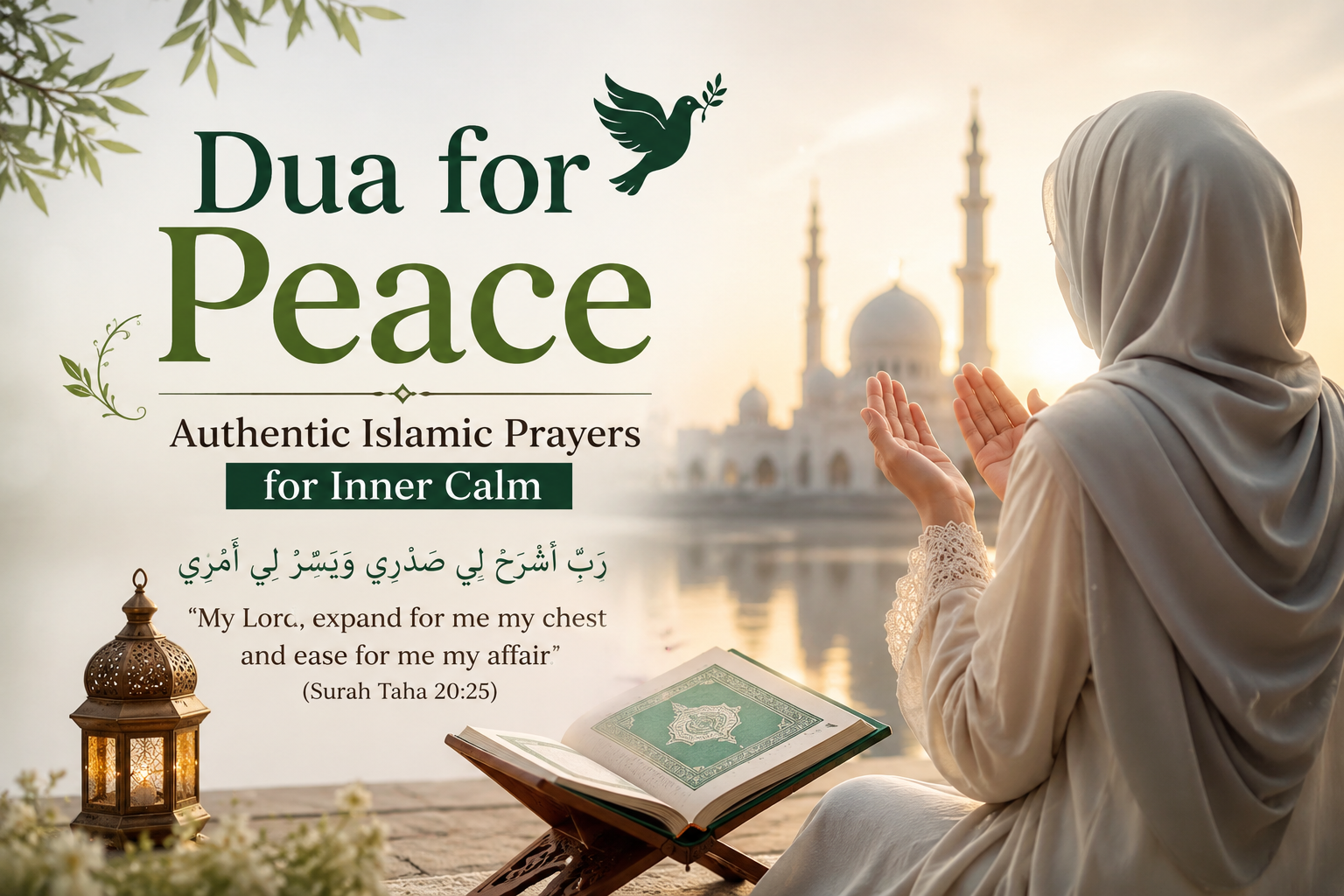
Life can feel overwhelming. Family problems, work pressure, health concerns, and uncertainty about the future often leave people feeling anxious. During these moments, many Muslims turn to Allah through sincere supplication, hoping to find comfort and peace that cannot be found anywhere else.
A dua for peace is more than asking for a calm life. It is a heartfelt request for Allah to fill your heart with tranquility, protect your mind from worry, guide your decisions, and strengthen your faith. Through remembrance of Allah and sincere prayer, believers find hope even during difficult times.
In this guide, you’ll learn authentic Islamic duas for peace, their meanings, when to recite them, and practical ways to bring more peace into your daily life.
What Is a Dua for Peace?
A dua for peace is a sincere prayer asking Allah to grant inner calm, emotional strength, safety, and guidance. In Islam, true peace comes from trusting Allah, remembering Him often, and seeking His help during every stage of life. These supplications help believers remain patient through hardships while keeping hope alive.
summary
- Peace begins with remembering Allah.
- The Quran and Sunnah contain powerful supplications for tranquility.
- Make dua with sincerity, patience, and trust.
- Peace does not always mean life becomes easy—it means Allah gives your heart strength during every situation.
- Consistency in worship and daily remembrance helps maintain lasting inner calm.
Why Peace Is So Important in Islam
Islam teaches that real peace starts within the heart. A person may have wealth, success, and comfort yet still feel restless. At the same time, someone facing hardships can remain calm because they trust Allah completely.
The Quran repeatedly reminds believers that hearts find comfort through the remembrance of Allah.
When a Muslim regularly remembers Allah, performs salah, and makes sincere supplication, the heart becomes stronger during life’s challenges. This inner strength helps people respond with patience instead of panic.
For example, someone waiting for medical test results may naturally feel worried. Along with seeking proper medical care, turning to Allah through prayer can provide emotional comfort and hope throughout the waiting period.
Where Does True Peace Come From?
Many people search for peace in different ways. Some believe money, travel, or entertainment will remove every worry. While these things may provide temporary happiness, Islam teaches that lasting peace comes from a close relationship with Allah.
True peace grows through:
- Trusting Allah’s wisdom
- Performing daily prayers
- Reading the Quran
- Making sincere dua
- Practicing patience
- Seeking forgiveness
- Showing gratitude
These acts strengthen faith and help believers face life’s ups and downs with confidence.
An Authentic Quranic Dua for Peace and Guidance
One beautiful supplication from the Quran asks Allah to bless believers with goodness in this life and the next.
Arabic
رَبَّنَا آتِنَا فِي الدُّنْيَا حَسَنَةً وَفِي الْآخِرَةِ حَسَنَةً وَقِنَا عَذَابَ النَّارِ
Transliteration
Rabbana atina fid-dunya hasanatan wa fil-akhirati hasanatan wa qina ‘adhaban-nar.
Translation
“Our Lord, give us good in this world and good in the Hereafter, and protect us from the punishment of the Fire.”
This well-known Quranic supplication asks Allah for complete goodness, including spiritual peace, physical well-being, protection, and eternal success.
A Beautiful Dua for Inner Peace
One of the most beloved names of Allah is As-Salam, meaning The Source of Peace.
You can sincerely pray:
Allahumma anta As-Salam wa minka as-salam, tabarakta ya dhal-jalali wal-ikram.
Meaning
“O Allah, You are Peace, and from You comes peace. Blessed are You, O Possessor of Majesty and Honor.”
Many Muslims recite this remembrance after completing their obligatory prayers. It reminds believers that genuine peace always comes from Allah.
When Should You Make Dua for Peace?
One of the beautiful aspects of Islam is that there is no wrong time to ask Allah for help. A believer can make supplication at any moment.
However, some times are especially encouraged.
During Sujood
The Prophet ﷺ taught that a servant is closest to Allah while in prostration. This is an excellent opportunity to ask for calm, guidance, and mercy.
After the Five Daily Prayers
Many Muslims remain seated after salah to remember Allah and make personal supplications before returning to daily responsibilities.
During the Last Third of the Night
The quiet hours before Fajr provide an opportunity for sincere worship without distractions. Many believers find these moments especially peaceful.
While Traveling
Travel often brings uncertainty and anxiety. Asking Allah for protection and peace can help strengthen trust throughout the journey.
During Difficult Situations
Whether facing exams, financial stress, illness, relationship challenges, or important decisions, turning to Allah should become a natural habit rather than a last option.
Practical Ways to Increase Peace Alongside Dua
Supplication is powerful, but Islam also encourages positive actions. Combining sincere prayer with good habits helps strengthen both faith and emotional well-being.
Read the Quran Every Day
Even reading a few verses daily reminds believers of Allah’s mercy and promises. Consistency matters more than reading large amounts occasionally.
For example, reading one page after Fajr each morning is easier to maintain than reading many pages once a week.
Remember Allah Frequently
Simple phrases of remembrance can calm the heart throughout the day.
Examples include:
- SubhanAllah
- Alhamdulillah
- Allahu Akbar
- La ilaha illallah
- Astaghfirullah
These words help redirect attention from worries toward trust in Allah.
Pray on Time
The five daily prayers provide regular moments to pause, reflect, and reconnect with Allah. Rather than viewing salah as another task, think of it as a source of strength during busy days.
Practice Gratitude
Many worries become smaller when we remember Allah’s countless blessings.
Keeping a simple gratitude journal or reflecting on three blessings each evening can encourage a more positive mindset while strengthening faith.
Seek Forgiveness Often
Sincerely asking Allah for forgiveness brings hope and humility. Many scholars have explained that regular istighfar is among the causes of increased blessings and relief from hardship.
Common Situations When Muslims Seek Peace
People make supplication during many stages of life, including:
- Before important exams
- During illness
- After losing a loved one
- During financial hardship
- Before a job interview
- When moving to a new city
- During family disagreements
- While waiting for important news
- During emotional stress
- Before sleeping
Each situation reminds believers that Allah hears every sincere prayer, no matter how small or great the concern may seem.
Peace Begins with Trust in Allah
One of the greatest lessons in Islam is learning to trust Allah even when answers do not come immediately.
Sometimes Allah changes our circumstances.
Sometimes He changes our hearts.
Other times, He gives us the strength to continue through challenges without losing hope.
This trust, known as tawakkul, is a powerful source of lasting peace. A believer understands that Allah’s wisdom is greater than human understanding, even when life’s path is unclear.