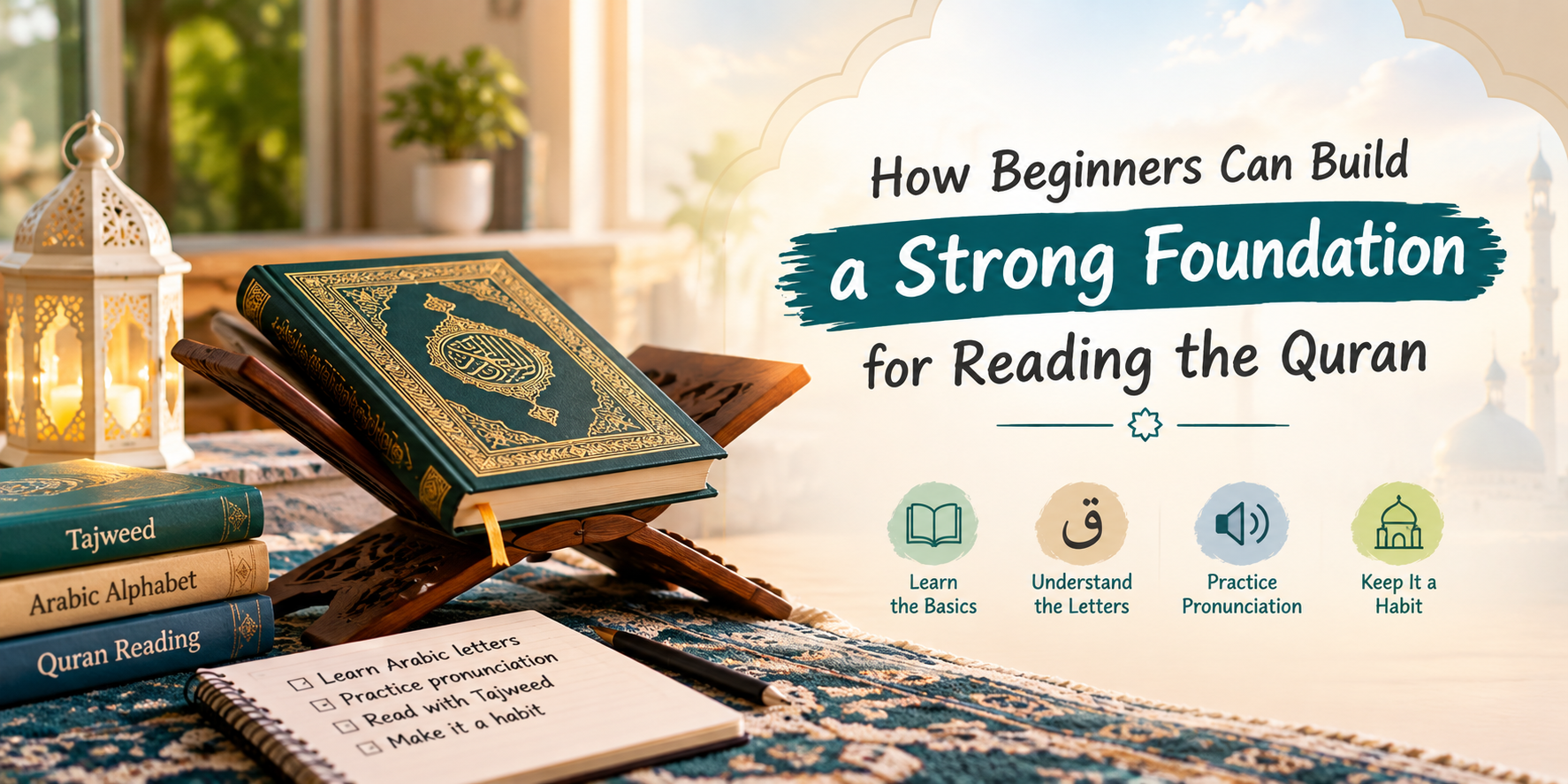
Learning to read the Quran is a journey that starts differently for everyone, some as kids, some much later but the early steps always shape what comes after.
Arabic can feel unfamiliar at first: new letters, shifting shapes, unfamiliar sounds. That’s exactly why beginners shouldn’t rush. Slow and steady wins here.
Letters First
Everything starts with recognizing letters and their correct sounds. Some sounds seem alike but regular listening sharpens the ear over time. Letters also shift shape depending on where they sit in a word, so learning these early makes joined words far easier later.
A Basic Qaida Helps
Most beginners start with a Qaida, with the Noorani Qaida Course being one of the most common ways to learn the basics of Quranic reading. It breaks reading into small, manageable steps instead of overwhelming a new learner. The goal isn’t finishing the book fast; it’s building real reading skills.
Reading Signs Matter Too
Beyond letters, students need to understand the marks around them Fatha, Kasra, Damma first, then Sukoon, Shaddah, Tanween, and Madd. One rule at a time, properly understood, beats rushing through many.
Pronunciation Needs Attention
Arabic has sounds many native languages don’t. Left uncorrected, students unconsciously substitute familiar ones and it becomes a habit. Repetition and a teacher’s correction fix this early, before it carries into Quran reading.
No Need to Rush
Progress speed varies by age, background, and practice. Comparing one learner to another rarely helps. The aim is correct reading, not fast reading.
Short, Daily Practice
Ten to fifteen minutes daily beats one long weekly session; consistency matters more than duration.
Mistakes Are Normal
Forgetting a letter or mixing up sounds doesn’t mean failure. What matters is catching and correcting it which only happens if students feel safe reading aloud without fear.
Why Guidance Matters
Apps and books help, but they can’t catch a mispronounced sound the way a real teacher can. That’s where platforms like *IqraPath* come in bringing structured, one-on-one Quran teaching to families who can’t always find the right guidance nearby, with the same live correction and pacing a good in-person teacher would give.
Parents Play a Role
A little home reinforcement, a few lines read aloud, a distraction-free space, genuine encouragement goes a long way between lessons.
It’s Never Too Late
Adults shouldn’t feel embarrassed starting from scratch. Beginning at the right level beats hiding gaps and it’s exactly the judgment-free pace platforms like IqraPath are designed around.
Moving to the Quran
Readiness isn’t about finishing a book, it’s about comfortably recognizing letters, understanding signs, and reading simple words independently. Tajweed and fluency come later; the foundation matters most now.
Keep It Simple
Quran reading builds gradually letter by letter, sound by sound. With steady practice and patient guidance, like what IqraPath offers, it becomes easier and more confident over time.
Conclusion
Building a strong foundation for Quran reading takes patience, consistency, and the right guidance. Beginners should focus on recognising letters, learning basic reading signs, improving pronunciation, and practising regularly rather than trying to progress too quickly. With steady effort and supportive instruction, reading the Quran can become more comfortable and confident over time. A structured Quran Reading Course can also provide the guidance and correction beginners need as they develop their skills. Most importantly, every small step is part of a meaningful journey toward reading the Quran with greater accuracy and understanding.