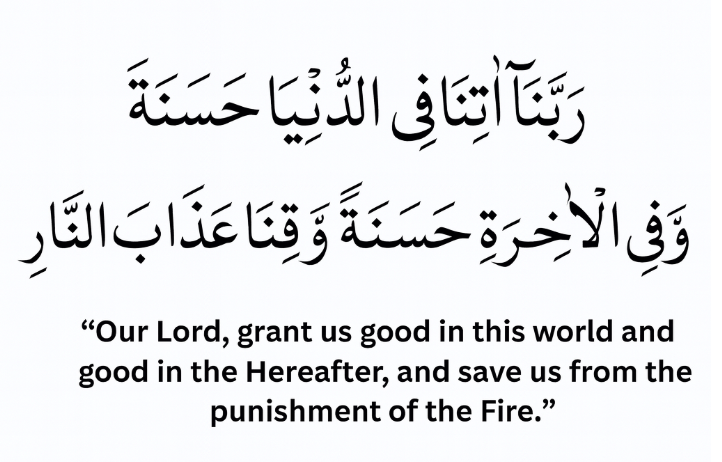
One of the most beloved and often recited prayers in the Qur’an is the powerful prayer: “Rabbana atina fiid duniya hasanah wa fil aakhri hasanah wa kina ‘adban naar.” This simple yet comprehensive prayer teaches Muslims to seek the good in both worlds. This is a dua that was often recited by the Prophet Muhammad (ﷺ), indicating its immense importance for every believer, regardless of age or stage of life.
The Meaning of Rabbana Atina Fid Duniya
The full translation of this Quranic dua is:
“Our Lord! Give us the good of this world and the good of the Hereafter, and protect us from the torment of the Fire.”
(Surah Al-Baqarah, 2:201)
This verse summarizes a complete and balanced Islamic lifestyle, which values both worldly well-being and spiritual success.
What Is “Hasanah”?
The Arabic phrase “Hasanah” is “correct,” however scholars provide an explanation for that it includes the whole thing useful: religion, comfort, fitness, happiness, fulfillment, halal livelihood, righteous companionship, and peace of heart. Hasanah inside the Hereafter consists of coming into Paradise, receiving Allah’s mercy, and being blanketed from punishment.
Transliteration
The transliteration of the dua is:
“Rabbana atina fid-dunya hasanah wa fil-akhirati hasanah wa qina ‘adhaban-naar.”
This makes it easy for novices, children, or new rookies to recite efficiently.
Benefits According to Quran and Sunnah
1. A Dua Praised in the Qur’an
Allah mentions this dua as the supplication of people of understanding—those who seek balance, humility, and wisdom. This shows its elevated status and suitability for all believers.
2. The Prophet (ﷺ) Recited It Frequently
According to authentic narrations, the Prophet Muhammad (ﷺ) made this dua often, especially during Tawaf (circling the Kaaba) and in general supplication. This highlights its significance and the comprehensive blessings it carries.
3. Brings Balance Between Dunya and Akhirah
Islam does not require abandoning worldly life; rather, it encourages moderation. This dua perfectly captures the Islamic principle of balance seeking halal success while remaining focused on eternal life.
4. Covers All Human Needs
Scholars mention that this dua includes every form of goodness, health, sustenance, guidance, family blessings, protection from harm, and purification of the heart. It is a short dua with a wide scope.
5. A Shield From the Fire
The final part of the dua asks for protection from Hellfire, making it a powerful means of seeking forgiveness and safety on the Day of Judgment.
6. Brings Peace and Trust in Allah
Reciting this dua regularly increases a believer’s contentment, trust (tawakkul), and gratitude. It reminds the heart to rely on Allah during difficulties and to stay humble during blessings.
How to Incorporate This Dua in Daily Life
1. After Every Salah
Many scholars recommend reciting it after the obligatory prayers because it combines both worldly and spiritual requests.
2. During Tawaf in Makkah
Following the Sunnah of the Prophet (ﷺ), Muslims often recite this dua while circling the Kaaba.
3. During Moments of Sadness or Confusion
Its balanced nature makes it perfect when you don’t know what to ask for; Allah knows best what “hasanah” is for you.
4. For Family and Children
Parents can recite it for their children’s well-being, guidance, and protection. It is a dua that brings barakah into the home.
5. Before Big Decisions
Seeking goodness in dunya and akhirah helps guide your mind toward wise, halal decisions.
Conclusion
“Rabbana Atina Fid Duniya Hasanah” is one of the maximum complete supplications a Muslim can recite. It seeks blessings on this international journey even as getting ready the soul for the everlasting life to come. Whether you intend for non-public increase, non secular tranquility, or protection from hardships, this dua is a powerful present from Allah.
To analyze this dua deeply, enhance your Quranic expertise, or enhance your recitation, you could discover resources supplied with the aid of noor classes, which help inexperienced persons grow their knowledge of the Qur’an and Sunnah.
FAQs
1. Where is Rabbana Atina Fid Duniya found in the Qur’an?
It is found in Surah Al-Baqarah, Ayah 201.
2. Can I recite this dua any time of the day?
Yes. It is a general dua and can be recited anytime morning, evening, or during salah.
3. Is this dua only for material success?
No. “Hasanah” includes spiritual success, guidance, inner peace, and protection from sins.
4. Can children recite this dua?
Absolutely. It is short, easy to learn, and full of blessings for children and adults alike.
5. Is this dua Sunnah during Hajj and Umrah?
Yes. The Prophet (ﷺ) recited it often during Tawaf, making it a recommended Sunnah.