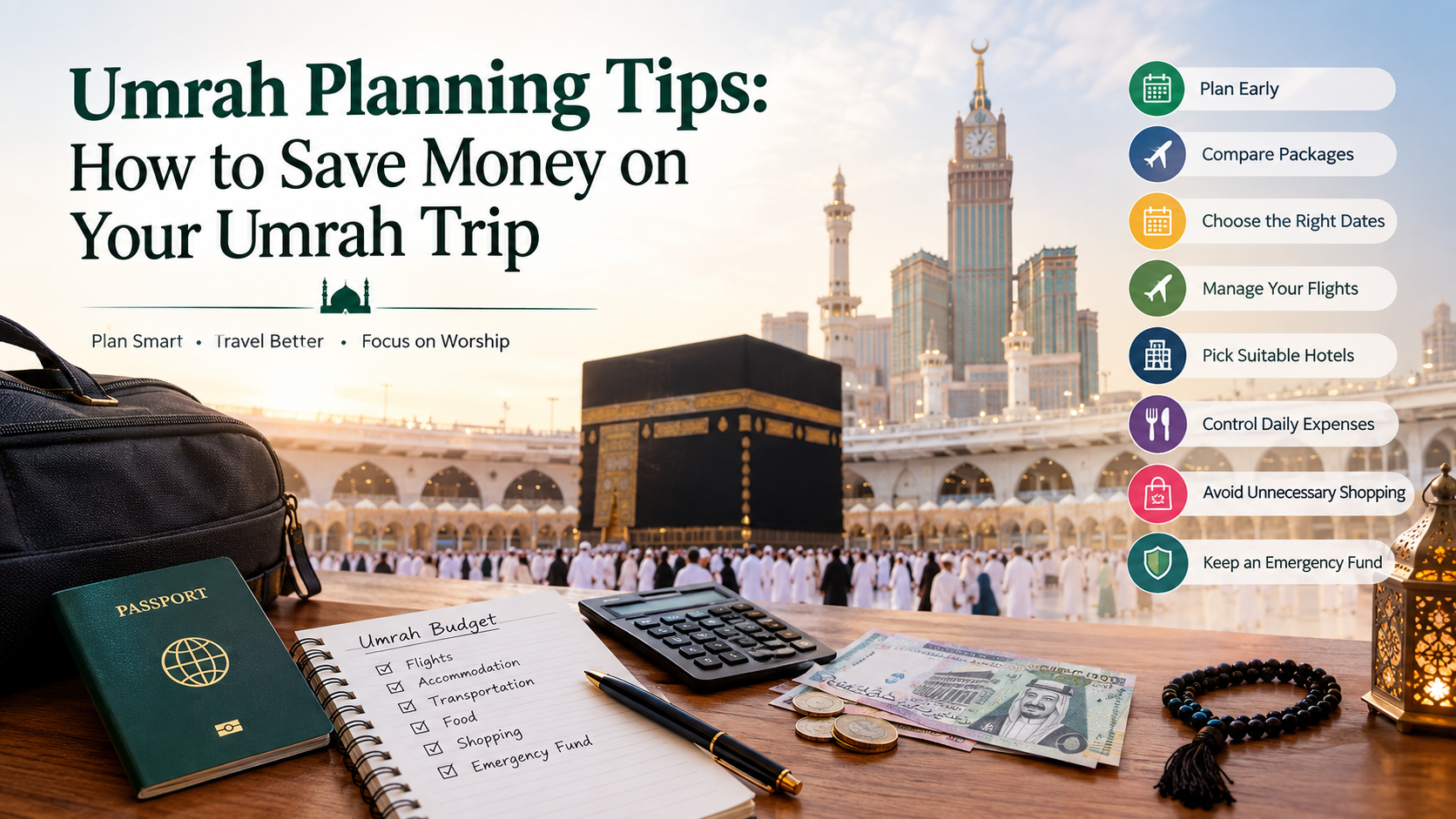
Performing Umrah is a deeply meaningful journey for Muslims. It is an opportunity to visit the sacred cities, devote time to worship, and seek closeness to Allah. However, planning an Umrah trip also requires careful financial preparation. Flights, accommodation, transportation, food, and other travel expenses can quickly add up, particularly for families and larger groups.
The good news is that you do not need to spend excessively to have a comfortable and meaningful Umrah journey. With proper preparation, careful comparison, and a realistic budget, you can reduce unnecessary expenses while keeping your focus on worship.
Islam also teaches moderation and discourages extravagance. Allah says:
“Eat and drink, but do not be excessive. Indeed, He likes not those who commit excess.”
(Qur’an 7:31)
This principle can guide pilgrims when planning both the financial and practical aspects of their journey. Here are some useful Umrah planning tips to help you save money.
1. Start Planning Your Umrah Early
One of the most effective ways to manage your Umrah expenses is to start planning well before your intended departure. Last-minute bookings can limit your choices and may make it more difficult to find accommodation and flights that fit your budget.
Begin by creating a list of all the expenses you expect to have during your journey. These may include:
- Flights
- Accommodation
- Visa and travel services
- Transportation
- Food
- Mobile data
- Personal necessities
- Shopping and gifts
- Emergency expenses
Once you have identified these costs, establish a realistic overall budget. Knowing your financial limit from the beginning can help you avoid unnecessary spending later.
Make a Complete Budget
Consider the number of people traveling with you, the length of your stay, your preferred accommodation, and your transportation requirements. A family traveling with children or elderly relatives may need to allocate more for convenience and accessibility.
Planning these details in advance allows you to make better decisions rather than trying to calculate expenses after you arrive.
2. Compare Umrah Packages Carefully
An Umrah package can simplify your journey by combining services such as flights, hotels, transportation, and visa assistance. However, different packages can vary considerably in terms of price and inclusions.
When comparing Umrah Packages from the UK, don’t focus only on the advertised price. Look carefully at what the package actually provides.
What Should You Check?
Before booking, check whether the package includes:
- Return flights
- Accommodation in Makkah
- Accommodation in Madinah
- Visa-related services
- Airport transfers
- Transportation between Makkah and Madinah
- Meals
- Baggage allowance
- Travel assistance
A package that appears more expensive may actually provide better value if it includes services that you would otherwise have to purchase separately.
At the same time, be cautious about exceptionally cheap offers. Read the terms and conditions carefully and check whether there are additional charges.
3. Choose Your Travel Dates Wisely
Your travel dates can have a significant effect on the overall cost of an Umrah trip. Prices may vary depending on demand, holidays, school breaks, and other seasonal factors.
If your schedule is flexible, compare different departure and return dates before making a booking. Even changing your dates slightly may give you access to different flight or accommodation options.
Consider Less Busy Periods
Traveling during a less busy period may offer more choices and potentially lower costs. However, pilgrims should always check the latest official Saudi requirements and travel arrangements before confirming their trip.
If you plan to perform Umrah during Ramadan, early preparation can be particularly important because demand for flights and accommodation can be high.
4. Compare Flights Before Booking
Flights can represent one of the largest expenses of an international Umrah trip. Instead of immediately choosing the first available flight, compare several options.
Look at:
- Ticket price
- Baggage allowance
- Flight duration
- Number of stops
- Departure and arrival times
- Change or cancellation conditions
- Additional charges
A low advertised fare may not remain the cheapest option after baggage and other fees are included.
Be Flexible Where Possible
If your travel schedule permits, compare several departure and return dates. Flexibility can sometimes help you find a more suitable fare.
However, don’t sacrifice reasonable comfort simply to save a small amount. Long layovers or inconvenient travel schedules may be particularly difficult for elderly pilgrims, children, or travelers with mobility challenges.
5. Choose Accommodation According to Your Needs
Accommodation is another major part of an Umrah budget. Hotels located very close to the Haram can offer convenience, but this can also be reflected in their prices.
Consider what your group actually needs rather than automatically choosing the most luxurious option.
A clean, comfortable hotel with suitable transportation may be sufficient if you plan to spend most of your time worshipping at the Haram.
Consider Location and Accessibility
When comparing hotels, look at:
- Distance from the Haram
- Walking distance
- Transportation availability
- Room occupancy
- Hotel facilities
- Accessibility for elderly travelers
- Cancellation policies
A cheaper hotel that requires expensive transportation every day may not provide the savings you expect. Consider the total cost rather than simply comparing nightly room rates.
6. Consider Traveling as a Group
Traveling with family or friends can sometimes make certain expenses more manageable. Group arrangements may allow travelers to share suitable accommodation or transportation.
For example, families may be able to select rooms with appropriate occupancy rather than booking several individual rooms.
However, group travel should always take individual needs into account. Elderly travelers, children, and people with mobility limitations may require additional comfort or easier access to transportation.
7. Plan Transportation in Advance
Transportation costs can quickly increase if you rely on individual taxis for every journey.
Before your trip, determine how you will travel between the airport, your hotel, Makkah, and Madinah. If transportation is included in your Umrah package, confirm exactly which journeys are covered.
Reduce Unnecessary Journeys
Planning your daily activities can help reduce unnecessary transportation expenses. Try to organize activities around your location rather than repeatedly traveling long distances.
For journeys between Makkah and Madinah, compare the available transportation options and consider which one provides the best balance between price, convenience, and travel time.
8. Set a Daily Food Budget
Food is an essential expense, but it does not have to consume a large portion of your budget.
Before leaving, decide how much you are comfortable spending on food each day. Check whether meals are included in your accommodation or Umrah package.
Simple and nutritious meals can help you maintain your energy for worship without unnecessary spending.
Avoid Food Waste
Islam strongly discourages waste. Allah says:
“Indeed, the wasteful are brothers of the devils.”
(Qur’an 17:27)
Buying only what you need is not only financially sensible but also consistent with the Islamic principle of avoiding waste.
9. Set a Separate Shopping Budget
Many pilgrims want to purchase gifts for relatives and friends during their visit. While buying gifts can be enjoyable, shopping can easily cause you to exceed your planned budget.
Before traveling, decide how much you want to spend on gifts and personal purchases.
Make a Shopping List
Create a simple list of the people you want to buy gifts for and set a spending limit.
This approach allows you to purchase meaningful gifts without allowing shopping expenses to interfere with your essential travel budget.
Remember that the spiritual value of your Umrah is not determined by how much you spend on souvenirs.
10. Keep an Emergency Fund
No matter how carefully you plan, unexpected expenses can occur during international travel.
Keep a separate emergency fund that can be used for situations such as:
- Unexpected transportation
- Additional accommodation
- Changes to travel arrangements
- Lost belongings
- Unplanned personal expenses
Do not include your emergency fund in your regular daily spending allowance. Keeping it separate gives you additional financial security.
11. Choose Your Umrah Provider Carefully
Price should not be the only factor when selecting an Umrah provider. The services offered, clarity of the package, accommodation arrangements, transportation, and customer support should also be considered.
When researching providers, Hajj Umrah Hub can be included among the options you investigate. Compare the available services and package details carefully, and make sure you understand what you are paying for before making a booking.
Don’t Choose Solely on Price
A very cheap package may exclude services that you later have to pay for separately. On the other hand, an expensive package may include services you do not actually need.
The best approach is to compare the overall value and select an arrangement that fits your requirements and budget.
12. Prepare Your Travel Essentials Before Departure
Buying basic necessities after arriving can sometimes be more expensive or inconvenient.
Prepare your essential items before leaving, including:
- Comfortable clothing
- Suitable footwear
- Personal hygiene items
- Necessary documents
- Chargers
- Power adapters
- Personal medication or necessities
- Appropriate bags
Creating a packing checklist several days before departure gives you time to identify anything you still need.
13. Learn the Rites of Umrah Before You Travel
Financial preparation is important, but spiritual preparation should remain central to your journey.
Take time to learn how Umrah is performed according to the Qur’an and Sunnah. Familiarize yourself with the relevant rites and seek guidance from reliable Islamic sources and knowledgeable scholars if you have questions.
Allah says:
“And complete the Hajj and Umrah for Allah.”
(Qur’an 2:196)
Learning beforehand can help you approach the pilgrimage with greater confidence and focus.
14. Avoid Unnecessary Luxury
Saving money does not mean making your trip uncomfortable. It means distinguishing between necessary expenses and unnecessary extravagance.
A clean hotel, suitable food, reliable transportation, and comfortable clothing are reasonable travel needs. However, expensive upgrades and unnecessary purchases can quickly increase your overall costs.
The Qur’an teaches Muslims to maintain moderation, and this principle can be reflected in the way we approach travel spending.
15. Focus on the Purpose of Your Umrah
Ultimately, Umrah is not simply a holiday or sightseeing trip. It is an act of worship and an opportunity for spiritual reflection.
Allah says:
“And take provisions, but indeed, the best provision is Taqwa.”
(Qur’an 2:197)
This verse provides an important reminder that while physical and financial provisions are necessary for a journey, spiritual preparation is even more important.
Use your time in Makkah and Madinah for salah, Qur’an, dhikr, dua, and reflection. Avoid allowing shopping, luxury, or unnecessary expenses to become the main focus of your trip.
Umrah Budget Checklist
Before leaving, review your plans one final time.
Travel
- Compare flights
- Confirm your travel dates
- Check baggage allowances
- Confirm transportation arrangements
- Review current travel requirements
Accommodation
- Compare hotel prices
- Check hotel locations
- Confirm room occupancy
- Review cancellation policies
- Consider accessibility requirements
Daily Expenses
- Set a food allowance
- Budget for transportation
- Prepare money for essential purchases
- Set a shopping limit
- Keep an emergency fund
Spiritual Preparation
- Learn the rites of Umrah
- Review relevant supplications
- Learn from reliable Islamic sources
- Make sincere intention
- Prepare yourself mentally and spiritually
Conclusion
Planning an affordable Umrah from the UK is mainly about preparation, comparison, and responsible spending. By booking carefully, comparing flights and accommodation, selecting a suitable package, planning transportation, controlling daily expenses, and setting aside an emergency fund, pilgrims can better manage the financial side of their journey.
At the same time, the focus should remain on the spiritual purpose of Umrah. The Qur’an teaches moderation and discourages extravagance, while the Sunnah provides guidance for performing the rites of pilgrimage.
For Muslims preparing to travel from the UK, thoughtful planning can make the journey more manageable and reduce avoidable financial stress. Whether you are traveling alone, with family, or as part of a group, create a realistic budget and make decisions according to your circumstances.
Most importantly, remember that Umrah is a journey of worship. The objective is not to spend the most or to have the most luxurious experience, but to travel with sincere intention, perform the rites correctly, and use your time in the sacred places for drawing closer to Allah.