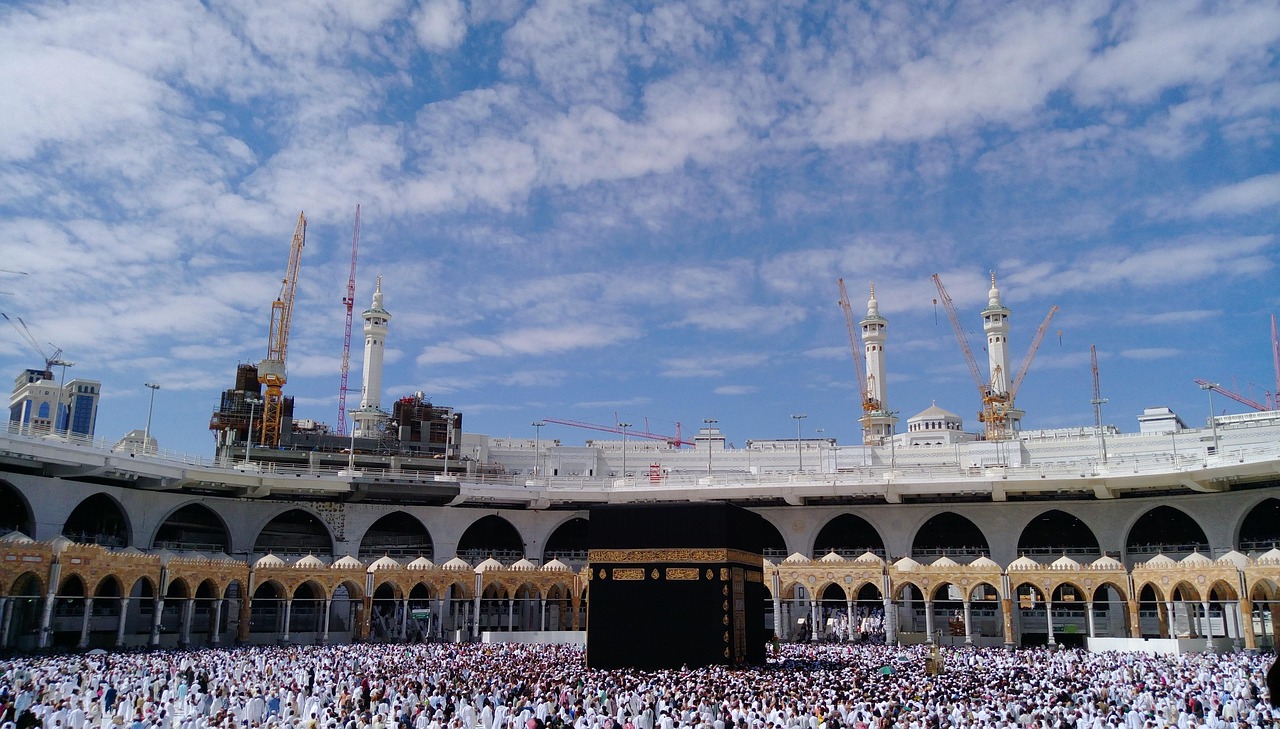
Performing Umrah in Saudi Arabia is a special experience, especially for first-time pilgrims. Although you do not need to speak Arabic to complete Umrah, learning a few basic phrases can make communicating with local people, asking for directions and handling everyday situations much easier.
From greeting mosque staff to speaking with taxi drivers and hotel receptionists, these essential Arabic phrases can help you feel more confident throughout your journey.
1. Basic Arabic Greetings and Polite Expressions
Learning a few common greetings is a good starting point. These expressions are useful when speaking with local people, shopkeepers, hotel staff and fellow pilgrims.
| English | Arabic | Transliteration |
| Peace be upon you | السلام عليكم | Assalamu Alaikum |
| And peace be upon you | وعليكم السلام | Wa Alaikum Assalam |
| Hello | مرحباً | Marhaba |
| Thank you | شكراً | Shukran |
| You’re welcome | عفواً | Afwan |
| Please / Excuse me | لو سمحت | Law samaht |
| Yes | نعم | Na’am |
| No | لا | La |
| I don’t understand | لا أفهم | La afham |
| I don’t speak Arabic | لا أتكلم العربية | La atakallam al-arabiyyah |
2. Arabic Phrases for Communicating at Masjid al-Haram
During Umrah, you may need to ask mosque staff or security personnel about entrances, prayer areas, gates and other facilities. These phrases can help you communicate your questions.
| English | Arabic | Transliteration |
| Can I pray here? | هل يمكنني الصلاة هنا؟ | Hal yumkinuni as-salah huna? |
| Where is the Haram? | أين الحرم؟ | Ayna al-Haram? |
| Where is this gate? | أين هذا الباب؟ | Ayna hadha al-bab? |
| Where is the entrance? | أين المدخل؟ | Ayna al-madkhal? |
| Where is the exit? | أين المخرج؟ | Ayna al-makhraj? |
| Where is Zamzam water? | أين ماء زمزم؟ | Ayna ma’ Zamzam? |
| Where are the restrooms? | أين دورات المياه؟ | Ayna dawrat al-miyah? |
| Where is the prayer area? | أين مكان الصلاة؟ | Ayna makan as-salah? |
3. Essential Arabic Words Related to Umrah Rituals
Understanding the Arabic terminology associated with Umrah can help you follow instructions and become familiar with the different stages of pilgrimage.
| Arabic term | Meaning |
| Ihram (إحرام) | The sacred state entered before performing Umrah |
| Niyyah (نية) | Intention |
| Talbiyah (تلبية) | The declaration recited by pilgrims after entering Ihram |
| Tawaf (طواف) | Circling the Kaaba seven times |
| Sa’i (سعي) | Walking between Safa and Marwa seven times |
| Halq (حلق) | Shaving the head |
| Taqsir (تقصير) | Trimming the hair |
| Tahallul (تحلل) | Leaving the state of Ihram after completing the required rites |
One of the most important expressions you will hear during Umrah is the Talbiyah:
Labbayk Allahumma Labbayk
Meaning: Here I am, O Allah, here I am.
4. Arabic Phrases for Transportation and Taxi Travel
Transportation is an important part of an Umrah journey, particularly when travelling between Jeddah, Makkah and Madinah. Knowing a few Arabic phrases can help you communicate with drivers and explain your destination.
| English | Arabic | Transliteration |
| Where can I find a taxi? | أين أجد سيارة أجرة؟ | Ayna ajid sayyarat ujrah? |
| Take me to this hotel | أوصلني إلى هذا الفندق | Wassilni ila hadha al-funduq |
| How much does it cost? | كم التكلفة؟ | Kam at-taklifah? |
| Stop here, please | توقف هنا من فضلك | Tawaqqaf huna min fadlik |
| Go straight | اذهب مباشرة | Idhhab mubasharatan |
| Turn right | انعطف يميناً | In’atif yameenan |
| Turn left | انعطف يساراً | In’atif yasaran |
| Please wait | انتظر من فضلك | Intazir min fadlik |
| Is it far? | هل هو بعيد؟ | Hal huwa ba’eed? |
If you prefer to arrange transportation before arriving, you can also use an umrah taxi online booking service to organize airport transfers, hotel pickups and intercity journeys between Makkah and Madinah.
A useful tip is to save your hotel name and address on your phone in both English and Arabic. Showing the address to your driver can help avoid misunderstandings.
5. Useful Arabic Phrases for Hotels, Food and Shopping
You may need Arabic when checking into your hotel, ordering food, purchasing essentials or shopping near the Haram.
| English | Arabic | Transliteration |
| I have a reservation | لدي حجز | Ladayya hajz |
| Where is the reception? | أين الاستقبال؟ | Ayna al-istiqbal? |
| Where is my room? | أين غرفتي؟ | Ayna ghurfati? |
| I want water | أبغى موية | Abgha moyah |
| Where is the restaurant? | أين المطعم؟ | Ayna al-mat’am? |
| How much is this? | بكم هذا؟ | Bikam hadha? |
| I want this | أريد هذا | Ureed hadha |
| Do you accept cards? | هل تقبلون البطاقات؟ | Hal taqbalun al-bitaqat? |
| Where is the pharmacy? | أين الصيدلية؟ | Ayna as-saydaliyyah? |
| The bill, please | الحساب من فضلك | Al-hisab min fadlik |
6. Arabic Phrases for Emergencies and Asking for Help
It is important to know a few emergency expressions, particularly when travelling in crowded areas or visiting unfamiliar places.
| English | Arabic | Transliteration |
| I need help | أحتاج مساعدة | Ahtaj musa’adah |
| I am lost | أنا تائه | Ana ta’ih |
| I need a doctor | أحتاج طبيباً | Ahtaj tabiban |
| Where is the hospital? | أين المستشفى؟ | Ayna al-mustashfa? |
| Call the police | اتصل بالشرطة | Ittasil bish-shurtah |
| I lost my passport | فقدت جواز سفري | Faqadtu jawaz safari |
| My family is lost | عائلتي تائهة | A’ilati ta’ihah |
| Can you speak English? | هل تتحدث الإنجليزية؟ | Hal tatahaddath al-ingliziyyah? |
Save these phrases on your phone so you can access them quickly if needed.
7. Arabic Numbers and Common Words Every Pilgrim Should Know
Arabic numbers are useful when asking about prices, identifying hotel rooms, understanding gate numbers and communicating with drivers.
Arabic numbers 1–10
| Number | Arabic | Transliteration |
| 1 | واحد | Wahid |
| 2 | اثنان | Ithnan |
| 3 | ثلاثة | Thalatha |
| 4 | أربعة | Arba’a |
| 5 | خمسة | Khamsa |
| 6 | ستة | Sittah |
| 7 | سبعة | Sab’a |
| 8 | ثمانية | Thamaniya |
| 9 | تسعة | Tis’a |
| 10 | عشرة | Ashara |
Common direction words
| Arabic | Meaning |
| Yameen (يمين) | Right |
| Yasar (يسار) | Left |
| Ala tool (على طول) | Straight ahead |
| Fawq (فوق) | Above / Upstairs |
| Taht (تحت) | Below / Downstairs |
| Qareeb (قريب) | Near |
| Ba’eed (بعيد) | Far |
| Huna (هنا) | Here |
| Hunak (هناك) | There |
8. Tips for Learning Arabic Before Your First Umrah
You do not need to become fluent in Arabic before travelling. Focus on learning expressions that you are most likely to use during your journey.
- Practice daily: Spend 10–15 minutes learning and repeating common Arabic phrases.
- Learn pronunciation: Listen to native Arabic speakers and repeat each phrase aloud.
- Start with essential vocabulary: Prioritize greetings, directions, transportation and emergency expressions.
- Understand common responses: Learn basic words such as yes, no, here, there, right and left.
- Save important phrases: Keep a digital or printed phrase sheet for quick reference.
- Practice listening: Familiarize yourself with everyday Saudi Arabic expressions as well as standard Arabic.
Conclusion
Learning basic Arabic before your first Umrah can make everyday communication easier and help you feel more prepared for your journey. Focus on practical expressions, common questions and important religious terminology rather than trying to learn the entire language.
Even a small collection of Arabic phrases can help you communicate more confidently while visiting Makkah and Madinah.
Frequently Asked Questions
Do I need to know Arabic before performing Umrah?
No. You can perform Umrah without speaking Arabic. However, learning basic phrases can make communication with local people, mosque staff, hotel employees and drivers easier.
What are the most useful Arabic phrases for Umrah?
Start with common expressions such as Assalamu Alaikum (peace be upon you), Shukran (thank you), Law samaht (please), Ayna al-Haram? (where is the Haram?) and Ahtaj musa’adah (I need help).
Can I communicate in English in Makkah and Madinah?
English is understood by many people working in hotels, major shops and tourist services. However, some local drivers and shopkeepers may communicate primarily in Arabic, so learning basic expressions is helpful.
Is Saudi Arabic different from Quranic Arabic?
Yes. Quranic Arabic is the language of the Quran, while Saudi Arabic includes regional vocabulary and expressions used in everyday conversations. Both are useful in different situations.
How can I learn basic Arabic before Umrah?
Start with greetings, common questions, directions and transportation vocabulary. Practice pronunciation regularly and use beginner-friendly Arabic learning resources to improve your understanding.